



List of Digital Therapeutics Companies - Who’s Changing the Game





Author
As CEO and Founder of Kangaroohealth, Dr. Kang is a healthcare innovator with nearly two decades of experience in healthcare and 20+ national and international awards. She received her PhD and medical training from Johns Hopkins University.Dr. Kang, CEO and Founder of Kangaroohealth, is a healthcare innovator with nearly two decades of experience. She has received over 20 national and international awards. Dr. Kang completed her PhD and medical training at Johns Hopkins University.


Disclaimer: This article is for informational purposes only and should not be considered medical advice. The information about digital therapeutics companies, their products, and clinical outcomes is based on publicly available data and company-reported results as of the publication date. Individual results may vary. Healthcare providers should conduct their own due diligence when evaluating digital health solutions for their practice. Patients should consult with their healthcare providers before starting any digital therapeutic program.
Healthcare is going digital, and it's no longer just about telehealth.
The global digital therapeutics market was valued at $7.67 billion in 2024 and is expected to reach $32.5 billion by 2030. Companies are now creating software that works alongside traditional treatments to help manage medical conditions more effectively.
We're talking about FDA-cleared programs that doctors prescribe to support diabetes management, depression treatment, and chronic pain care.
Let's look at the digital therapeutics companies leading this shift.
TL;DR - List of Top Digital Therapeutics Companies
Here's a quick snapshot of the leading players:
- KangarooHealth
- Omada Health
- Click Therapeutics
- Noom
- Kaia Health
- Akili Interactive
- Welldoc
These aren't all the companies in the space, but they're the ones with proven results and regulatory approval.
Keep in mind that while these companies all operate in digital health, they take different approaches.
Some focus purely on software-based interventions, while others (like KangarooHealth) combine technology with hands-on clinical support from nurses and care coordinators.

What are Digital Therapeutics (DTx)?
Digital therapeutics are evidence-based software programs that help prevent, manage, or support the treatment of medical conditions. The Digital Therapeutics Alliance defines them as therapeutic interventions driven by high-quality software.
These are not just apps that track your steps or remind you to take pills. They deliver direct interventions.
Digital therapeutics actively support condition management through cognitive behavioral therapy, therapeutic exercises, or behavioral modification programs. The software itself is the intervention.

How Digital Therapeutics Differ From Wellness Apps
Here's what sets DTx apart from general wellness apps you find on the App Store:
- Clinical Validation Is Mandatory: Every digital therapeutic must prove its effectiveness through randomized controlled trials. Results get published in peer-reviewed journals. A digital therapeutic for insomnia, like Pear Therapeutics' Somryst, had to prove through clinical trials that it actually improves insomnia severity index scores and sleep efficiency.
- Medical Claims Require Evidence: Wellness apps can say they "support" your health journey or "encourage" better habits, but they don't provide evidence to back up those claims. They cannot claim to treat, manage, or prevent diseases. Digital therapeutics make specific medical claims backed by clinical data.
- FDA Oversight Is Required: The FDA regulates digital therapeutics products as Software as a Medical Device (SaMD). They undergo the same safety and effectiveness reviews as traditional medical treatments. Wellness apps face minimal oversight. They don't need FDA clearance, clinical trials, or published research.
- Doctors Prescribe Them: You can download MyFitnessPal or Headspace directly from an app store and start using them immediately. Prescription digital therapeutics require authorization codes from clinicians, payors, or employers before you can access the full program.
- Data Handling Follows Stricter Rules: While wellness apps should protect your information, digital therapeutics must comply with HIPAA regulations and maintain the same cybersecurity standards as other medical devices.

Top Digital Therapeutics Companies for Chronic Disease Management
Now that we understand what sets digital therapeutics apart from wellness apps, let's look at the companies delivering these evidence-based solutions.
The companies below are at the forefront of digital health innovation. Each brings unique solutions to chronic disease management.
| Column 1 | Column 2 | Column 3 | |
|---|---|---|---|
Company | Founded | Focus Areas | Regulatory Status |
KangarooHealth | 2015 | RPM, RTM, CCM, PCM | CMS compliant |
Omada Health | 2011 | Diabetes prevention, weight management | CDC-recognized DPP |
Click Therapeutics | 2012 | Depression, migraine, and schizophrenia | Multiple FDA approvals |
Noom | 2008 | Weight management, diabetes prevention | CDC-recognized DPP |
Kaia Health | 2016 | Musculoskeletal, COPD | CE-marked |
Akili Interactive | 2011 | ADHD, cognitive disorders | FDA-approved |
WellDoc | 2005 | Diabetes, cardiometabolic conditions | 11 FDA clearances |
Now let's look at what makes each company stand out:
1. KangarooHealth
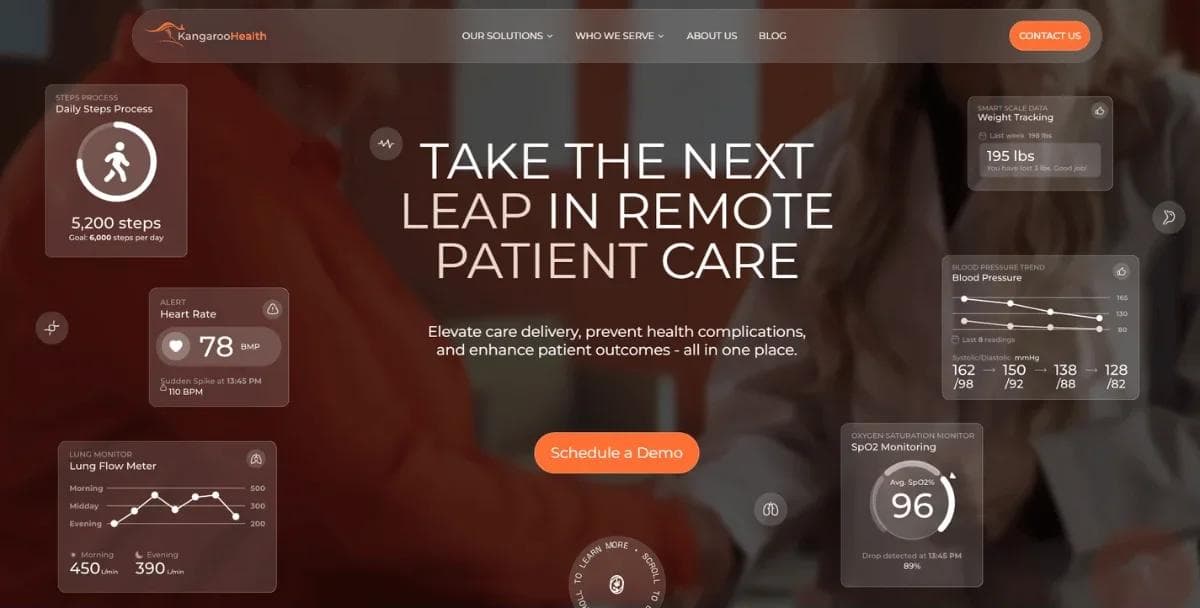
KangarooHealth has been helping with remote patient care since 2015.
We provide an all-in-one connected care platform for Remote Patient Monitoring (RPM), Remote Therapeutic Monitoring (RTM), Chronic Care Management (CCM), and Principal Care Management (PCM).
Since our founding, we have delivered real results with strong clinical outcomes:
- 6 million+ physiological data points processed
- 200,000+ monitoring hours logged
- 48% reduction in adverse events compared to standard care
- 13,500+ lives helped through our monitoring
This approach helps providers reach patients beyond clinic walls without adding staff burden.
Our careful "white-label" monitoring uses more nurses per patient and multilingual staff (who speak 15+ languages) to ensure every patient gets personal attention.
The platform supports over 50 chronic conditions and integrates easily into existing workflows.
Since our device-agnostic technology works with any remote monitoring device, you can choose what works best for your practice from over 100 options.
We train your staff, procure devices, and support internal monitoring when needed. Setup happens in under two weeks.
Schedule your free demo of KangarooHealth's all-in-one platform today.
2. Omada Health
Omada Health provides virtual care programs for the prevention and management of chronic diseases.
The company focuses on diabetes prevention, weight management, and hypertension care through a combination of technology and human coaching.
Program outcomes include:
- First virtual DPP to receive CDC recognition in 2017
- 1 million+ member enrollments across multiple conditions
- 76% of diabetes program members meet A1C reduction goals
- 89% satisfaction rate for hypertension program participants
- Connected devices, including smart scales, blood pressure monitors, and CGMs
Omada's approach focuses on custom care plans, one-on-one health coaching, and easy device connections.
3. Click Therapeutics

Click Therapeutics develops prescription digital therapeutics targeting neurological and behavioral conditions.
The company operates at the intersection of neuroscience and software engineering.
FDA-approved products include:
- CT-152 (Rejoyn™): FDA-cleared treatment for major depressive disorder
- CT-132: FDA-authorized preventive treatment for episodic migraine
- CT-155: Phase 3 trials for schizophrenia treatment
- Multiple pipeline products for various conditions
- Software-Enhanced Drug™ therapies combining digital and pharmaceutical treatments
Click Therapeutics partners with major pharmaceutical companies, including Otsuka
Pharmaceutical and Boehringer Ingelheim.
Their approach combines clinically validated interventions with proprietary neuromodulatory mechanisms.
4. Noom

Noom applies behavioral psychology to weight management and chronic disease prevention.
The company operates a digital health platform that combines psychology, technology, medication access, and human coaching.
Platform capabilities include:
- CDC-recognized Diabetes Prevention Program since 2017
- 1 million+ member enrollments
- Psychology-based behavior change curriculum
- GLP-1 medication access through Noom Med
- AI-powered tools, including food logging and body composition analysis
Noom's approach focuses on sustainable habit formation using cognitive-behavioral therapy principles.
Their diabetes prevention program shows significant weight loss maintenance, with participants achieving 6.15% weight loss at 65 weeks.
It's similar to what many chronic care management companies are seeing with their long-term support programs.
5. Kaia Health

Kaia Health provides digital solutions for musculoskeletal and respiratory care.
The German company has established itself as a leader in motion-analysis technology and evidence-based digital therapy.
Clinical evidence and reach:
- 11 clinical trials demonstrating safety and effectiveness
- 40+ programs for muscle, joint, and pelvic health
- 140,000+ patients studied for safety outcomes
- 2,500+ employers and health plans as clients
- Advanced computer vision technology for exercise feedback
Kaia's platform uses smartphone cameras to provide real-time exercise correction without additional sensors.
Their programs combine physical therapy, education modules, and human coaching support.
6. Akili Interactive
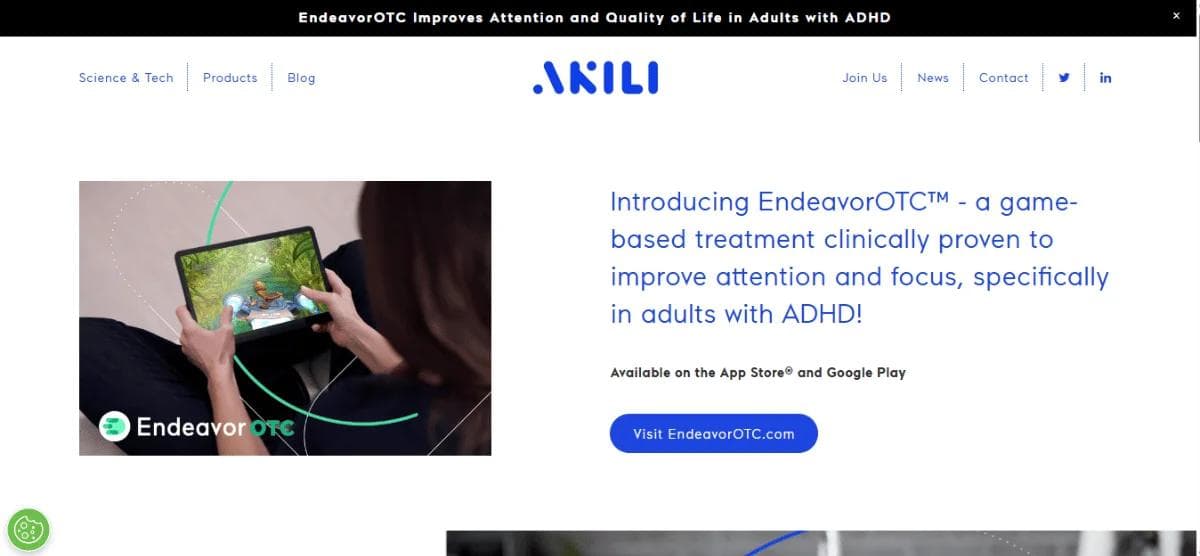
Akili Interactive creates prescription video game treatments for cognitive impairments.
The company made history with EndeavorRx, the first FDA-approved prescription video game for children with ADHD.
Key products and achievements:
- EndeavorRx: FDA-approved treatment for pediatric ADHD
- EndeavorOTC: Over-the-counter version for adults with ADHD
- Built on proprietary Selective Stimulus Management Engine (SSME™) technology
- Clinical studies show 73% of adult users report quality of life improvements
- 30+ clinical trials supporting their technology platform
Akili's approach targets specific neural systems through fun video game experiences.
Their technology has been rigorously tested across multiple clinical studies published in peer-reviewed journals, including The Lancet Digital Health.
7. WellDoc

WellDoc pioneered AI-driven digital therapeutics for diabetes and cardiometabolic conditions.
Founded in 2005, the company has built an impressive portfolio of clinical evidence and regulatory achievements.
Clinical achievements include:
- 11 FDA 510(k) clearances for diabetes management
- 90+ peer-reviewed publications
- 57 patents in digital health technology
- 1.9% point A1C improvement in clinical studies
- $3,048-$3,252 annual cost savings per diabetes patient
WellDoc's platform connects to 400+ devices and integrates with existing care workflows.
Their BlueStar program provides personalized digital coaching backed by clinical evidence, showing why remote patient monitoring for diabetes care works so well.
The company partners with major healthcare organizations, including CVS Health, Cigna, and Abbott.
Key Factors That Define Successful DTx Companies
Not all digital therapeutics companies succeed.
Here's what separates winners from failures:
Clinical Evidence Quality Matters Most
Successful companies publish randomized controlled trial results in peer-reviewed journals. The evidence bar is high and getting higher.
Consider these results:
- Omada Health's diabetes prevention program achieved a 0.23% HbA1c reduction over 12 months in their PREDICTS trial.
- Meta-analysis of hypertension DTx shows reductions of 3.75 mmHg systolic and 1.79 mmHg diastolic blood pressure.
Companies without solid evidence struggle to gain provider trust or payer coverage.
Reimbursement Strategy Determines Viability
This is the industry's biggest challenge. Payer coverage remains inconsistent.
Better Therapeutics reported $22.8 million in net losses in nine months despite FDA clearance, largely due to a lack of insurance support.
Meanwhile, Germany's fast-track DiGA program shows promise with negotiated prices between €200 and €250 per treatment period.
The program allows provisional reimbursement during ongoing clinical trials.
This approach may speed up adoption compared to traditional approval processes.
Strong Partnerships Speed up Growth
Leading companies work with healthcare providers, drug companies, payors, and employers. These partnerships give them ways to sell their products, build trust, and get resources.
Recent partnership examples include:
- Click Therapeutics partnered with Medidata and Dassault Systèmes in 2025
- CureApp allied with Teijin Pharma in 2024
Zephyr AI and KangarooHealth teamed up in 2024 to make better digital health tools.
KangarooHealth also joined the National Association of Rural Health Clinics as a top vendor. This helps bring remote patient monitoring to rural areas that don't have many doctors or hospitals nearby.
Solo ventures struggle to build these connections on their own.
User Engagement Directly Impacts Outcomes
High attrition rates plague the industry.
- Even well-designed, gamified products see 50% engagement drops within three months.
- Mental health conditions requiring sustained treatment face particular challenges.
- Patients with depression or anhedonia often lack the intrinsic motivation to consistently use apps.
Successful companies incorporate human coaching, real-time feedback, and personalized interventions to maintain engagement.
How to Evaluate Digital Therapeutics Companies for Your Needs
Choosing the right digital therapeutics partner can feel overwhelming with so many options available.
Here's a practical approach to help you find the best fit for your practice:
- Start with Clinical Evidence: Does the company have real clinical trial data? Ask to see published study results with specific numbers, not just vague wellness claims. If they can't show you measurable health improvements, that's a red flag.
- Test the User Experience: Request a demo and think like your patients. Is the app actually easy to use for someone who isn't tech-savvy? Does it offer personalized content or just generic information for everyone? Look for features that actually help change behavior, like smart reminders or motivational elements.
- Verify Regulatory Status: Make sure the FDA has cleared or approved the product. Most digital therapeutics are Class II medical devices. If you're considering international solutions, check for the CE Mark in Europe or the DiGA approval in Germany.
- Assess Integration Needs: Will this actually work with your current systems? Ask about EMR integration, data formats, and what training your staff will need. Find out if it works on basic smartphones or requires special devices that might be barriers for patients.
- Understand Total Costs: Look beyond the monthly fee. What about setup costs, device expenses, and ongoing support? Ask for transparent pricing and volume discounts. Hidden costs can quickly make a "affordable" solution expensive.
- Evaluate Company Stability: How long has the company been around? Check their funding status and leadership experience. You don't want to invest time training staff and enrolling patients only to have the company disappear.
- Start Small: Most reputable companies offer pilot programs. Test with a small group of patients first, get feedback from both patients and your team, then measure the actual results before expanding.

Frequently Asked Questions (FAQs)
Here are answers to the most common questions about digital therapeutics:
What Makes a Digital Therapeutic Different From a Health App?
Digital therapeutics must prove clinical effectiveness through randomized controlled trials and receive FDA clearance as medical devices.
Health apps face no such requirements. Wellness apps only track activities or provide general guidance, not make medical claims.
Can Digital Therapeutics Replace Traditional Treatment?
Usually, no. Digital therapeutics typically complement rather than replace traditional medicine. They work best as adjunct therapies alongside medications or in-person care.
Some exceptions exist for mild-to-moderate conditions, early intervention scenarios, or when side effects prohibit drug use. Also, DTx cannot replace emergency medical services or treat severe acute conditions.
How Do FDA Approvals Impact Digital Therapeutics?
FDA clearance establishes credibility and market access. Clearance opens doors to provider adoption and potential reimbursement, though it doesn't guarantee payer coverage.
The process validates that products meet baseline standards similar to other medical treatments.
What Conditions are Best Suited for Digital Therapeutics?
Chronic conditions requiring frequent interventions see the most success. Diabetes represents 29.75% of the DTx market, as per the Grand View Research report mentioned earlier.
Hypertension management through DTx achieves 3.75 mmHg systolic blood pressure reductions, as noted in the meta-analysis discussed earlier.
Mental health conditions (depression, anxiety, PTSD, insomnia) benefit from cognitive behavioral therapy delivered digitally. Weight management, chronic pain, ADHD, and smoking cessation also show strong results with continuous care management approaches.
Conclusion
Digital therapeutics show great promise.
But many healthcare providers still struggle with a basic challenge: how to monitor patients effectively between visits without overwhelming their already stretched staff.
KangarooHealth solves this challenge by providing remote patient monitoring and chronic care management for healthcare providers, clinics, and health systems (on a white-label basis).
We monitor your patients at home through connected devices and video communication, alerting you only when intervention is needed. This means we handle the technology, clinical monitoring, and billing while you focus solely on direct patient care.
Get started with KangarooHealth and see how connected care can help your practice without adding staff burden. Over 13,500 patients already benefit from our monitoring with 98% satisfaction rates.

Dr. Xiaoxu Kang
AuthorAs CEO and Founder of Kangaroohealth, Dr. Kang is a healthcare innovator with nearly two decades of experience in healthcare and 20+ national and international awards. She received her PhD and medical training from Johns Hopkins University.Dr. Kang, CEO and Founder of Kangaroohealth, is a healthcare innovator with nearly two decades of experience. She has received over 20 national and international awards. Dr. Kang completed her PhD and medical training at Johns Hopkins University.
Other articles you might find interesting

Rural Health Transformation Fund: Grant Programs, Eligibility, RPM, and CCM Models

Clinical Care Coordination: Models, Use Cases, and Challenges

Value-Based Care Trends in 2026: AI, RPM, CCM, and Connected Care