

Top 7 Care Management Tracking Systems for Modern Healthcare




Author
As CEO and Founder of Kangaroohealth, Dr. Kang is a healthcare innovator with nearly two decades of experience in healthcare and 20+ national and international awards. She received her PhD and medical training from Johns Hopkins University.Dr. Kang, CEO and Founder of Kangaroohealth, is a healthcare innovator with nearly two decades of experience. She has received over 20 national and international awards. Dr. Kang completed her PhD and medical training at Johns Hopkins University.


Healthcare is shifting from the traditional reactive model to a proactive, continuous, and preventive one. This shift requires you to onboard new technologies, including new care management systems.
Without a robust coordination and tracking system, you risk being overwhelmed with data silos, missed patient red flags, and manual documentation.
In this post, we’ll explore the top care management tracking systems and how to choose the right one for your practice.
TL;DR - 7 Best Care Management Tracking Systems
Here’s a quick rundown of the top 7 care management tracking systems we’ll cover in this post:
| Column 1 | Column 2 | Column 3 |
|---|---|---|
System | Features | |
KangarooHealth | Remote patient care features | |
Supports Remote Patient Monitoring (RPM), Chronic Care Management (CCM), Remote Therapeutic Monitoring (RTM), Principal Care Management (PCM), Advanced Primary Care Management (APCM), and Guiding an Improved Dementia Experience (GUIDE) | ||
Supports over 50 chronic conditions with customizable care pathways | ||
Care plan development and update features | ||
Epic Healthy Planet | Sharing and aggregating data features | |
Performance analytics to track target metrics in contracts with payors | ||
Integrated social care tools | ||
Primary care visit features | ||
Sales Force Health Cloud | Unified patient views | |
Care coordination and management | ||
Care team collaboration features | ||
Innovaccer | Data activation platform | |
Predictive analytics | ||
AI-powered care management copilot | ||
CarePort | Transitional care management features | |
Referral management features | ||
Real-time data and alerts | ||
Oracle Health | Integrated enterprise healthcare solutions | |
Care coordination and tracking tools supporting community care, home health, behavioral health, long-term care, and rehabilitation | ||
athenahealth | Integrated EHR | |
Patient engagement features | ||
Care coordination and management features |
What is a Care Management Tracking System?
A care management tracking system is a digital health solution that helps providers document, coordinate, and track patients across different healthcare settings.
Depending on your type of practice and patient population, you can deploy such a tracking system in:
- Chronic Care Management (CCM) or Principal Care Management (PCM) to track monthly interactions and health status for your patients with two or more chronic conditions.
- Remote Patient Monitoring (RPM) to track vitals remotely, using connected devices and a cloud platform.
- Remote Therapeutic Monitoring (RTM) to track non-physiological data, such as pain levels and medication response (patient-reported).
- Advanced Primary Care Management (APCM) to track primary care services and deliver coordinated care for your Medicare population.
- Guiding an Improved Dementia Experience (GUIDE) to track longitudinal dementia care as well as caregiver support (monitoring respite care hours and supporting caregiver education).
- Transitional Care Management (TCM) to provide critical care after discharge and prevent readmissions.
- Behavioral Health Integration (BHI) to coordinate mental health services alongside primary care.
These systems can aid the shift to value-based care by tracking patients’ vitals, care managers’ activities, and referral management.
Key Benefits of Care Management Tracking Systems
Rolling out a care management tracking system can benefit both your patients and your healthcare business's operational performance.
Here are the key benefits:
- Improved clinical outcomes: Continuous tracking of patients’ vitals reduces ER visits through early detection. For instance, in a study evaluating whether telemonitoring can reduce hospitalization and the cost of care, the probability of 30-day and 90-day readmissions in the telemonitoring group was 44% and 38% lower, respectively.
- Higher operational efficiency: The systems allow automating various tasks, including core care management workflows and documentation. Your care managers will have more time for higher-value tasks and can care for more patients without burning out.
Additionally, streamlining documentation will improve your organization's financial health. It ensures every billable minute is captured and that you always have audit-ready documentation.
Essential Features to Evaluate When Selecting a System
Care management tracking systems have different features depending on their area of focus.
Generally, you can expect the following essential ones:
- Patient risk stratification: AI and predictive analytics-enabled immediate identification of high-risk and rising-risk patients is an essential feature. It ensures timely interventions to reduce rates of adverse events.
- Care plan development: It’s also important to have customizable templates to create individualized care goals and interventions. You can then address each patient’s unique needs without sacrificing operational scalability.
- Workflow management: Task management and automation features are essential. For instance, you can have alerts for follow-up calls, medication reconciliation, and upcoming appointments.
- Time tracking: Time tracking features are crucial for programs like CCM, where qualifying for reimbursements requires you to document non-face-to-face minutes.
Top 7 Care Management Tracking Systems
While every platform has its unique strengths, certain solutions consistently outperform the rest in patient risk stratification, care plan development, workflow management, time tracking, and other essential care management tracking capabilities.
We’ve curated the top 7 companies that can help streamline care management tracking workflows:
1. KangarooHealth
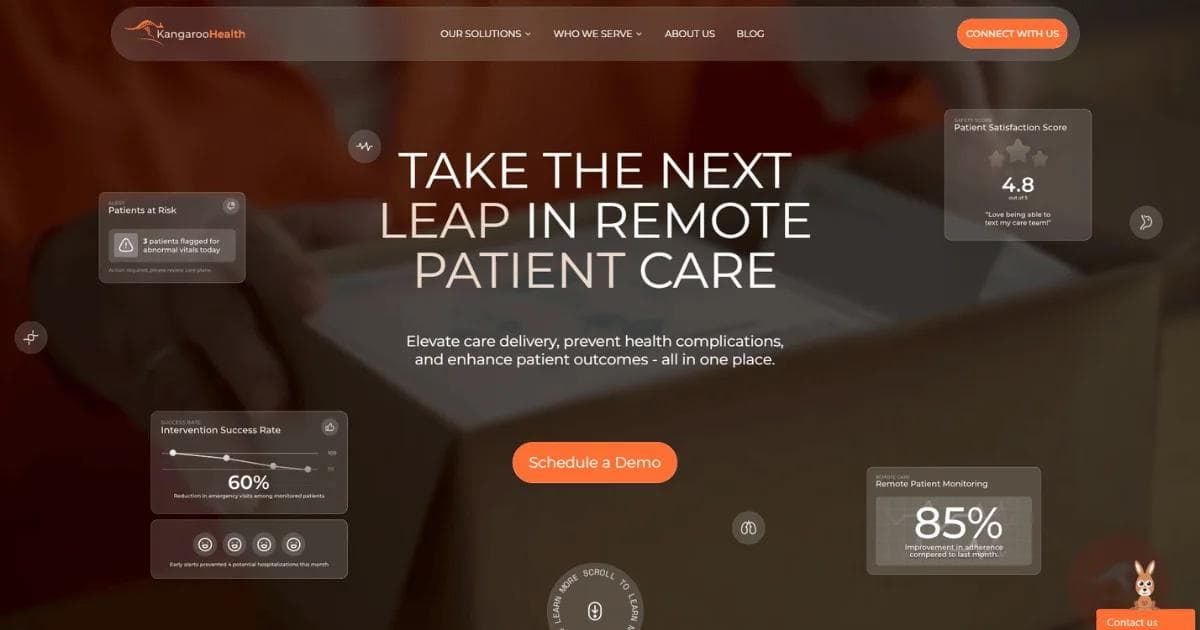
KangarooHealth is a remote patient care platform designed for providers looking to roll out reimbursable programs like RPM and CCM.
The solution supports care plan development and updates, workflow management, patient risk stratification, and time tracking.
With KangarooHealth, you also get:
- A comprehensive digital health suite that supports RPM, CCM, RTM, and PCM with “white-label” monitoring with multi-lingual nurses.
- An all-in-one connected care platform that supports over 50 chronic conditions with customizable care pathways.
- Complete implementation support to ensure you are up and running in weeks, not months.
Additionally, the platform is device-agnostic. You can use the devices your patients are already familiar with.
Ready to see how KangarooHealth’s platform, connected devices, and care management workflows can fit your unique healthcare setting?
Schedule your free demo to speak with an expert and see how KangarooHealth’s care management tracking systems can transform your practice.
2. Epic Healthy Planet
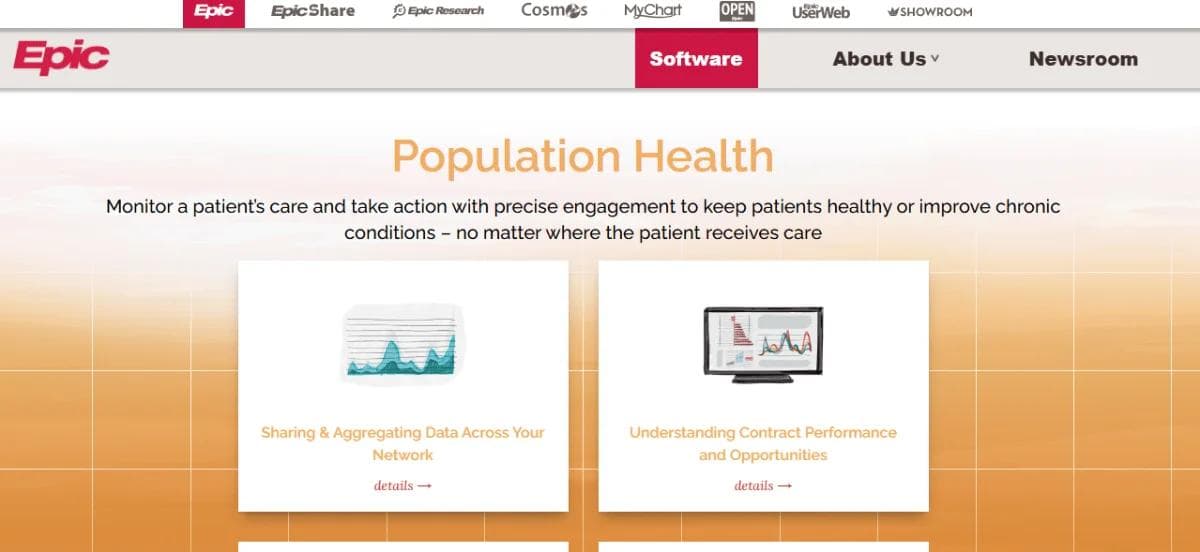
Epic’s population health module is designed to help you track patients’ care and deliver targeted interventions, no matter where they receive care.
You can use it to support care gap closures, care coordination, risk stratification workflows, and the tracking of quality metrics and outcomes.
Additionally, you can use it to track social drivers of health and refer your patients to relevant local programs and services.
3. Salesforce Health Cloud
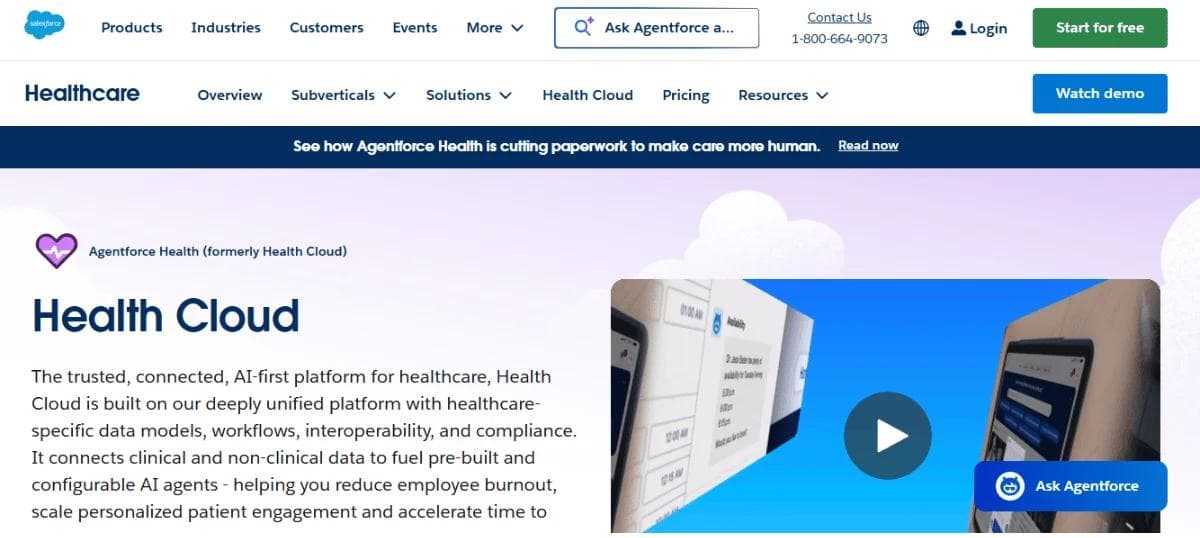
Salesforce offers a CRM-style care management system for providers looking to integrate both clinical and non-clinical data.
You can use the platform to create unified 360-degree views of each patient, automate business processes, manage appointments, and deliver home health with automated scheduling and medication management.
4. Innovaccer
Innovaccer offers an AI-powered care management module that automates documentation, summarizes records, and performs predictive risk scoring.
You can use its data aggregation and activation platform to pull data from different sources to create a single comprehensive view of each patient. You can then transform the unified data into actionable insights for your care team.
5. CarePort
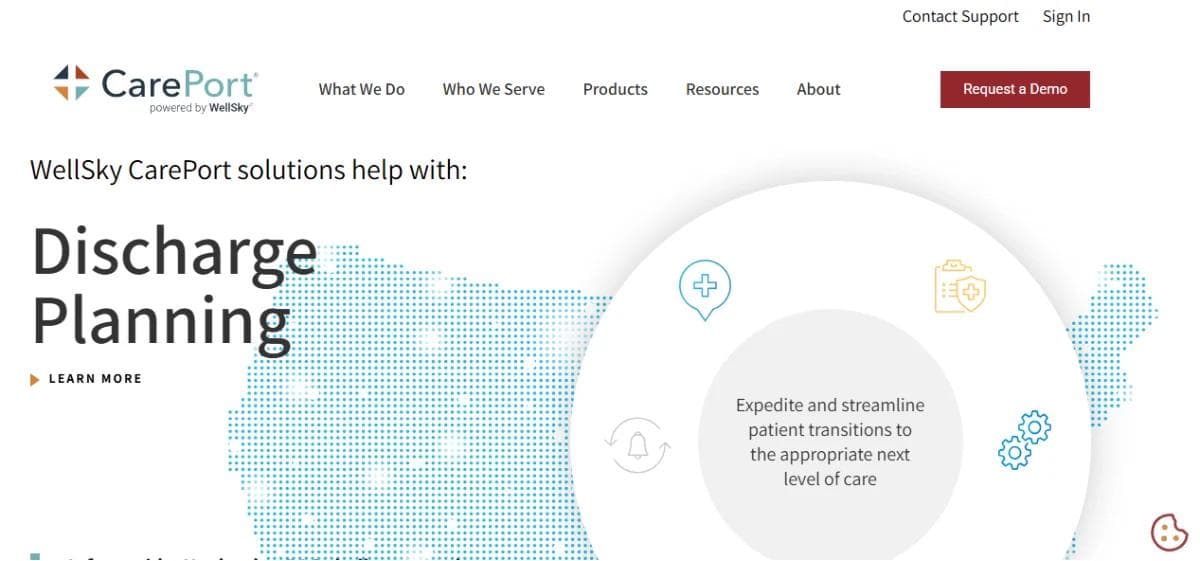
CarePort, offered by WellSky, is a platform designed to help providers and health systems manage transitions of care across multiple settings.
The platform is mainly created for post-acute care. You can use its integrated post-discharge solutions to track and manage patients across the continuum of care.
You’ll receive contextual updates and alerts to direct your patients to the appropriate level of care. The enhanced coordination and collaboration help significantly reduce avoidable readmissions.
6. Oracle Health
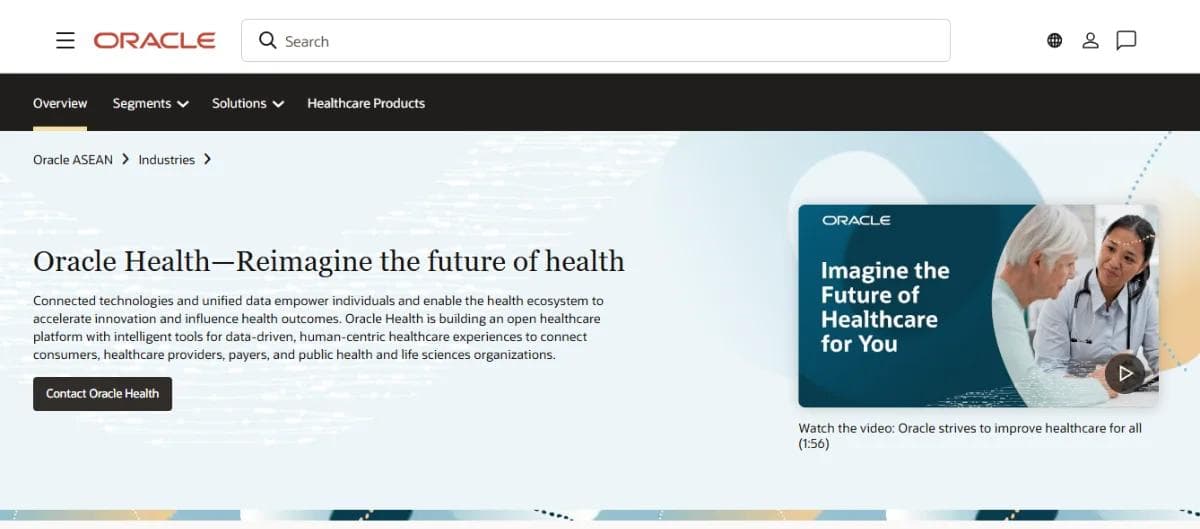
Oracle Health offers a comprehensive digital health suite that integrates care management with the primary EHR.
You can use the enterprise-grade unified solutions to scale population health management, streamline operations, and reduce administrative burdens in a large health system.
Because of the complexity and cost of the Oracle ecosystem, it may not be a good fit for you if you are a smaller facility that doesn’t need a highly scalable enterprise solution.
7. athenahealth
The digital health company offers a fully integrated suite featuring EHR, RCM, and care coordination/management tools.
With athenaOne, you can use the care management module to create and manage care plans, streamline transitional care, and roll out remote patient care. It also uses AI to support predictive risk stratification.
However, because the company does not offer clinical support services, its remote patient offering is limited.
How to Choose the Right Care Management Tracking Solution
The right solution for you will depend on your unique healthcare organization's goals.
Here are three steps to choose the right care management tracking solution for you:
- Identify care gaps: Audit your current workflow to identify the gaps you need to close. For instance, you may want to solve medication adherence gaps, post-discharge visibility problems, or unaddressed social determinants of health. Which bottlenecks can the tracking solution help you solve?
- Define the patient population: This helps determine the type of program and care management tracking solution to utilize. For instance, if you have comorbid chronic senior patients, a platform that positions you to benefit from chronic care management may be the superior choice.
- Schedule a demo with a shortlisted vendor: Before committing to a vendor, request a live workflow demo to see how the solution handles the tasks you care about, e.g., how to create and update a care plan.
Common Challenges and Solutions
While a well-designed care management tracking system from the right vendor can help you avoid most implementation hurdles, it helps to be aware of the following common challenges:
- Patient enrollment challenges: Many chronic disease management programs require patient consent before enrollment. Also, device distribution may complicate onboarding. At KangarooHealth, we simplify consent capture and handle device procurement/distribution to reduce friction.
- Data overload: More analytics and reporting increase the volume of data your team has to review. To reduce data overload, use exception-based reporting.

Frequently Asked Questions (FAQs)
Looking for more information about care management tracking systems?
Here are answers to some commonly asked questions:
What Reporting Metrics Matter Most in a Care Management Tracking System?
Key reporting metrics include:
- Clinical outcome metrics, e.g., ER visit rates, hospitalization rates, and 30-day readmission rates.
- Engagement metrics, e.g., monthly contact completion rate.
- Financial metrics, e.g., data transmission days and claim denial rates.
- Compliance metrics, e.g., audit-ready time logs and care plan update frequency.
What is the Average Cost of a Care Management Tracking System?
Pricing models vary widely. At KangarooHealth, we offer a service-based pricing model that eliminates the need for a large upfront investment.
Our platform is also designed to maximize reimbursement for qualifying services, ensuring financial sustainability.
Does a Care Management Tracking System Work with Legacy Software?
Yes, interoperability and integration features are common. For instance, KangarooHealth integrates seamlessly with popular EHR systems such as Epic, Cerner, and Athena.
Conclusion
Investing in a care management tracking system is a significant decision. The best platform should not only meet the highest clinical standards but also be operationally simple to run.
Key operational issues to consider include EHR compatibility, staff and patient adoption barriers, billing compliance, and clinical staffing.
At KangarooHealth, we designed our platform with all these variables in mind. Our solution integrates with the most popular systems and automatically logs clinical activity, ensuring you are always billing-ready. Additionally, we provide a multi-lingual virtual nursing team so you don’t have to hire additional staff for clinical monitoring.
Contact us today to speak with an expert and learn how our care management tracking systems can transform your practice.

Dr. Xiaoxu Kang
AuthorAs CEO and Founder of Kangaroohealth, Dr. Kang is a healthcare innovator with nearly two decades of experience in healthcare and 20+ national and international awards. She received her PhD and medical training from Johns Hopkins University.Dr. Kang, CEO and Founder of Kangaroohealth, is a healthcare innovator with nearly two decades of experience. She has received over 20 national and international awards. Dr. Kang completed her PhD and medical training at Johns Hopkins University.