

Best Chronic Disease Management Programs - Complete List





Author
As CEO and Founder of Kangaroohealth, Dr. Kang is a healthcare innovator with nearly two decades of experience in healthcare and 20+ national and international awards. She received her PhD and medical training from Johns Hopkins University.Dr. Kang, CEO and Founder of Kangaroohealth, is a healthcare innovator with nearly two decades of experience. She has received over 20 national and international awards. Dr. Kang completed her PhD and medical training at Johns Hopkins University.


Disclaimer: The information in this guide pertains to various Chronic Disease Management (CDM) programs. It comes from third-party sources and may change as healthcare laws and regulations update. This content is for educational purposes only. It’s not intended to be medical, legal, billing, or reimbursement advice.
Healthcare providers (HCPs) are responsible for choosing appropriate programs and services, adhering to all regulatory requirements, and submitting accurate claims based on medical necessity and following current CMS guidelines.
Reimbursement rates, CPT codes, and coverage requirements differ by payor and location. Always verify billing details with your payors before rolling out CDM programs.
KangarooHealth recommends consulting with reimbursement specialists or legal counsel to ensure compliance. HCPs maintain full responsibility for choosing appropriate services, selecting the correct codes, and following all regulations.
According to the Centers for Disease Control and Prevention (CDC), three in four American adults live with at least one chronic condition. For seniors, the prevalence is even more alarming, with 90% of those aged 65 and older having at least one chronic condition.
Given the scale of the problem, providing high-touch, patient-centered care can be a challenge. Most health providers lack the staff and time required to provide continuous chronic care and clinical oversight at this scale.
Fortunately, various Chronic Disease Management programs are stepping in to ease the burden. These programs integrate remote patient care and engagement, clinical workflows, data monitoring, and reimbursement pathways to enhance patient care.
This article examines the various Chronic Disease Management (CDM) programs available to patients and providers and provides guidance on selecting the best option for your healthcare organization.
TL;DR - Chronic Disease Management Programs
Comprehensive chronic disease management includes clinical coordination, medication management, behavioral interventions, lifestyle management, and remote monitoring.
As such, various payors provide reimbursable pathways for the following CDM programs:
- Remote Patient Monitoring (RPM)
- Chronic Care Management (CCM)
- Principal Care Management (PCM)
- Remote Therapeutic Monitoring (RTM)
- Advanced Primary Care Management (APCM)
- Guiding an Improved Dementia Experience (GUIDE)

What are Chronic Disease Management Programs?
As many segments of chronic care transition away from the four walls of the clinic, you need a way to extend your reach to where patients reside. Here is where CDM programs come in.
CDM programs are clinical support services designed to help patients manage chronic conditions outside of traditional in-office visits.
As a seamless extension of your practice, you’ll be able to incorporate essential components such as:
- Risk stratification
- Personalized care plans
- Continous assessments
- Medication reconciliation
- Outcome tracking and reporting
- Ongoing and responsive patient engagement
Types and Models of Chronic Disease Management
The most popular types of Chronic Disease Management programs are the remote-monitoring-driven and the care-coordination-driven models. Additionally, there are condition-specific models tailored to address the unique needs of specific diseases.
Let’s look at them:
Remote-Monitoring CDM Models
Chronic conditions like diabetes and hypertension require you to keep track of your patients’ data. However, frequent in-office visits to measure and record vitals can be straining, both physically and financially, especially for seniors.
The following CDM programs can help you alleviate this burden:
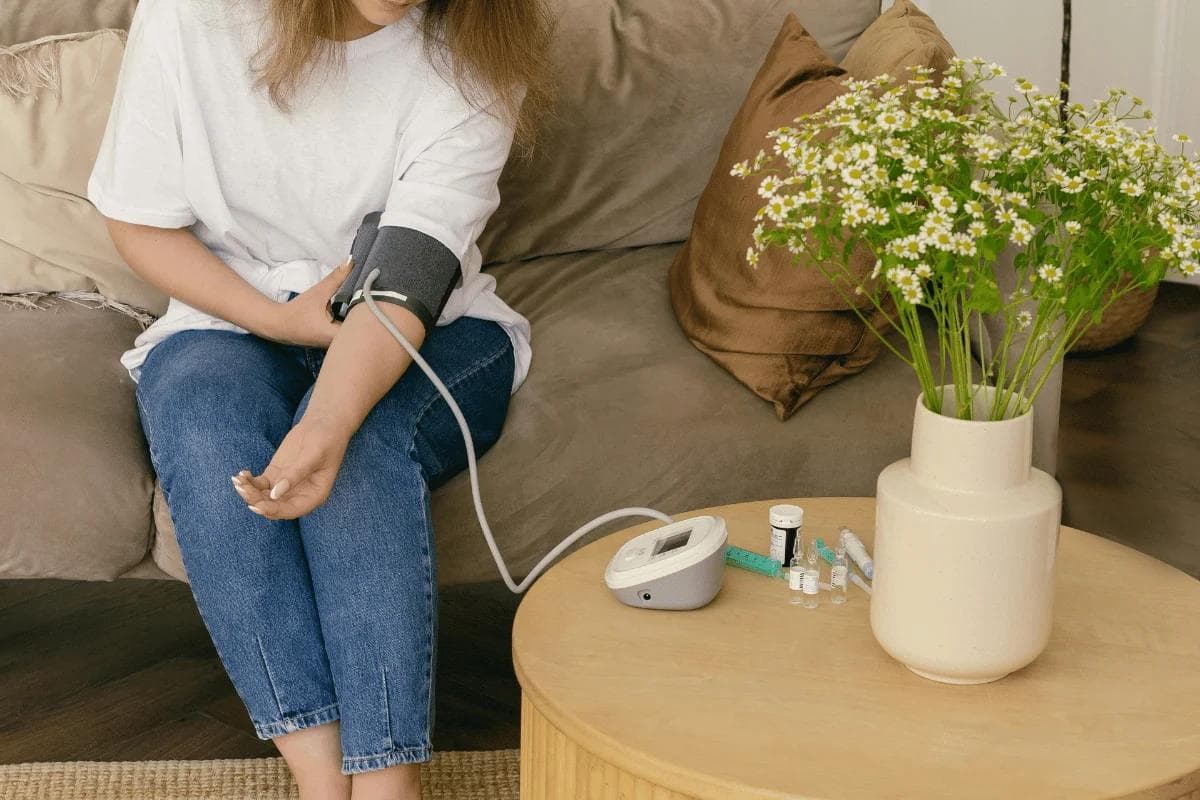
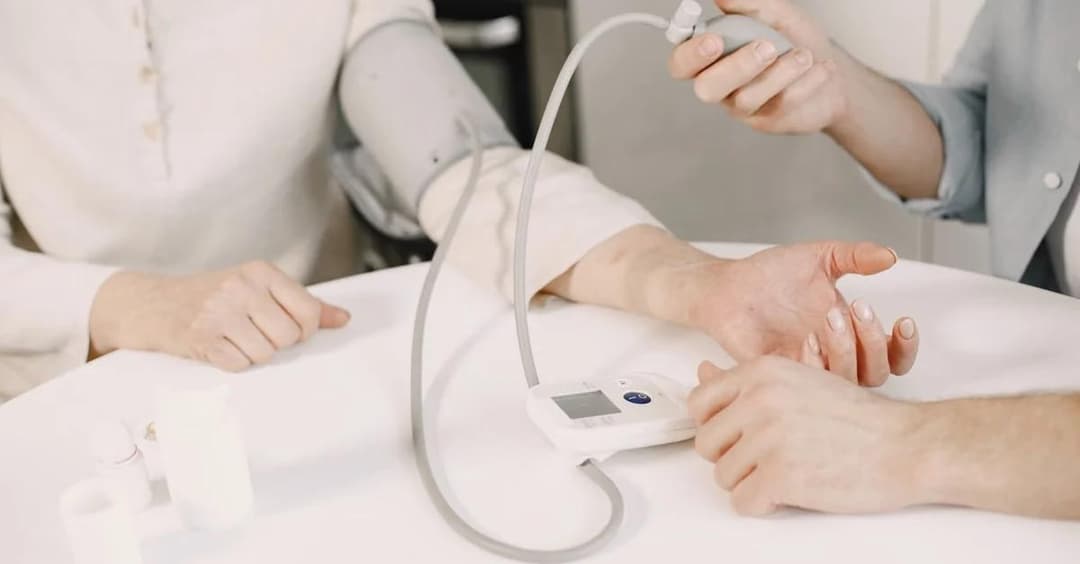
- Remote Patient Monitoring (RPM): RPM equips patients with connected devices, enabling them to collect their own physiological data and automatically transmit it to their healthcare provider. The three main components of Remote Patient Monitoring programs are education and setup, device supply, and treatment and management.
- Remote Therapeutic Monitoring (RTM): RTM captures non-physiological data. The data is often self-reported. You can use RTM to measurably support mental health, physical recovery, and medication adherence.
Care-Coordination CDM Models
When you deploy non-face-to-face care delivery for patients with complex chronic conditions or comorbidities, you’ll need tools to ensure seamless care planning, care coordination, and clinical oversight.
The following CDM programs provide the required tools, frameworks, and workflows:
- Chronic Care Management (CCM): CCM is designed for patients with two or more chronic conditions that are expected to last more than 12 months. The CCM program requires you to provide personalized assistance and at least 20 minutes per month of remote care coordination.
- Principal Care Management (PCM): PCM is designed for patients with a single serious condition that requires extra attention. The condition should be severe enough to necessitate frequent adjustments to medication or treatment regimens.
- Advanced Primary Care Management (APCM): APCM bundles Principal Care Management, Chronic Care Management, and Transitional Care Management. It relies on technology for virtual check-ins, interprofessional consultations, and remote evaluations of pre-recorded data.
Condition-Specific Models
This model includes frameworks and workflows that help operationalize the management of specific chronic conditions, including congestive heart failure (CHF), chronic kidney disease (CKD), and mental health conditions.
For instance, Guiding an Improved Dementia Experience (GUIDE) is the nationwide model evaluating the impact of delivering comprehensive support services for dementia patients and their caregivers.
The key components of GUIDE are care navigation, caregiver training and education, respite services (up to $2,500 per year), connection to community resources, and 24/7 access to a support line.

Evidence-Based Strategies for Managing Chronic Conditions
Many CDM models have been operational for several years, giving providers, payors, and regulators reliable data on their effectiveness.
As such, there are evidence-based strategies you can confidently roll out knowing they will have a significant impact on both patient outcomes and the operational efficiency of your healthcare organization.
Let’s explore the two evidence-based strategies you should prioritize:
Remote Monitoring and Guidance
Remote monitoring, along with the subsequent support and guidance, has shown significant promise in improving outcomes, adherence, and cost efficiency in the management of chronic conditions.
For instance, a study evaluating the impact of telemonitoring on readmission rates and cost of care reported the following results:
- There was a 44% reduction in 30-day readmissions and a 38% reduction in 90-day readmissions.
- These reductions resulted in approximately 11% cost savings for the payor.
- The estimated Return on Investment (ROI) on the telemonitoring program was approximately 3.3 (meaning $1 invested returned $3.3).
Additionally, data on the impact of RPM on adherence is equally encouraging. A study of diabetic Texas Medicaid patients examined their adherence to daily self-monitoring of blood glucose (SMBG)-based RPM protocols.
In the two study cohorts (adherent = 186 patients; non-adherent = 196 patients), the mean transmission rates improved as follows:
- Adherent cohort: 82.8% to 91.1%
- Nonadherent cohort: 45.9% to 60.2%
Also, over the study period, both cohorts reported significant improvements in vital stats such as variability of blood glucose levels and mean blood glucose levels.
Care Coordination and Multi-Provider Communication
Chronic patients enrolled in programs like CCM and APCM, which enhance care coordination and multi-provider communication, are seeing significant improvements in outcomes.
For instance, in a study commissioned by Medicare to evaluate its CCM program, researchers found that patients under CCM utilized ER services less often and had substantially lower hospitalization rates. Also, the monthly spending by Medicare was $95 lower per patient (excluding those who received CCM for only one month).
Also, a report evaluating the diffusion and impact of CCM services (following over 684,000 Medicare patients over two years) recorded the following:
- Hospital stays after 6, 12, and 18 months were 32, 47, and 99 fewer per 1,000 CCM patients, respectively.
- Emergency room visits after 6, 12, and 18 months were 31, 23, and 76 fewer per 1,000 CCM patients, respectively.
This indicates that a key benefit of the CCM program is that the longer the patients stayed enrolled, the better the results got.

How to Choose and Access the Right Program
As evidence suggests, CDM programs can have a transformative effect on both your patients and practice. So, how do you go about choosing the right program(s)?
The two main criteria are:
- Needs of your patient population: What does your patient population look like? For instance, if you serve high-risk seniors with multiple chronic conditions, you should consider CCM and RPM.
- Reimbursement alignment: Based on your jurisdiction and the payers available, which programs can you sustainably roll out? For instance, if you primarily serve Medicare beneficiaries, you can comfortably roll out RPM, CCM, RTM, PCM, APCM, and GUIDE.
Further, there are operational criteria to consider, including your care team's capacity, existing clinical workflows, and technology requirements.
However, you don’t have to rely solely on your own internal resources to roll out CDM programs. You can easily address these operational considerations by working with a remote patient care service provider - KangarooHealth.
We provide the following:
- A multi-lingual clinical team to manage the CDM program on your behalf, so you don’t have to expand your own care team.
- A non-disruptive implementation that’s aligned with your existing clinical workflows.
- A robust cloud platform and compatible connected devices, so technology isn’t a bottleneck.
We’ll brief you on real-world outcomes and reimbursement insights informed by data from our previous implementations.
Moreover, our turn-key CDM implementation is quick, ensuring you can be up and running in weeks, not months.
Contact us today to speak with an expert and discover which CDM program is right for you.
List of Best Chronic Disease Management Programs
To recap, here are the top Chronic Disease Management programs to consider for your healthcare organization:
- Remote Patient Monitoring (RPM)
- Chronic Care Management (CCM)
- Principal Care Management (PCM)
- Remote Therapeutic Monitoring (RTM)
- Advanced Primary Care Management (APCM)
- Guiding an Improved Dementia Experience (GUIDE)
Our platform, KangarooHealth, supports all six programs. The specialties we cover include primary care, nephrology, cardiology, pulmonology, endocrinology, neurology, podiatry, oncology, rehabilitation, and pain management.
Frequently Asked Questions (FAQs)
Before we end, here are answers to the commonly asked questions about chronic disease management programs:
What Conditions Qualify for Chronic Disease Management Programs?
Save for the condition-specific models, enrollment isn’t based on particular conditions but more on broad eligibility criteria. That said, the most commonly enrolled conditions are:
- Diabetes
- Dementia
- Hypertension
- Hyperlipidemia
- Chronic heart failure (CHF)Chronic Obstructive Pulmonary Disease (COPD)
How Long Do Patients Typically Stay Enrolled?
The enrollment durations vary because CDM programs differ in intensity and objectives.
Retention durations range from a few months to indefinite (until admission to a nursing home/death).
What Documentation is Needed for Program Enrollment?
You’ll typically need the following documentation:
- Verbal or written consent from the patient
- Documentation proving eligibility
- A comprehensive care plan
What Labs or Diagnostics Are Commonly Ordered?
You don’t need special tests for enrolling patients in a CDM program. The tests depend on the patient’s specific condition.
Generally, you’ll need core metabolic and hematologic panels as well as condition-specific lab tests. For instance, you can order the routine Hemoglobin A1c (HbA1c) test for patients managing diabetes.
Conclusion
The benefits of Chronic Disease Management programs are clear. You can expect lower hospitalizations and ER visits, as well as higher engagement and adherence. Moreover, the programs are typically financially self-sustaining.
Nonetheless, there is a resource barrier to launching these programs effectively. KangarooHealth is here to resolve this problem, taking the technology and human resource requirements off your plate.
We provide support for staff training, patient enrollment and education, device procurement and distribution, and maintaining comprehensive documentation for compliance.
Ready to launch CDM programs without the administrative burden? Contact us today to determine the next steps.

Dr. Xiaoxu Kang
AuthorAs CEO and Founder of Kangaroohealth, Dr. Kang is a healthcare innovator with nearly two decades of experience in healthcare and 20+ national and international awards. She received her PhD and medical training from Johns Hopkins University.Dr. Kang, CEO and Founder of Kangaroohealth, is a healthcare innovator with nearly two decades of experience. She has received over 20 national and international awards. Dr. Kang completed her PhD and medical training at Johns Hopkins University.
Other articles you might find interesting

Medicare GUIDE Program: Eligibility, Benefits, and How It Compares to CCM
Remote Patient Monitoring for Heart Failure: Metrics, Clinical Alerts, and Outcomes
FQHC Remote Patient Monitoring: Billing, Reimbursement, and Compliance Guide