

What is IoT Connected Health? Benefits, Applications, and ROI





Author
As CEO and Founder of Kangaroohealth, Dr. Kang is a healthcare innovator with nearly two decades of experience in healthcare and 20+ national and international awards. She received her PhD and medical training from Johns Hopkins University.Dr. Kang, CEO and Founder of Kangaroohealth, is a healthcare innovator with nearly two decades of experience. She has received over 20 national and international awards. Dr. Kang completed her PhD and medical training at Johns Hopkins University.


The shift to value-based care requires you to extend your reach beyond your clinic’s walls to serve your patients wherever they are.
So, how do you go about building a bridge between your care team and the patient’s location? This is where IoT-connected health comes in.
In this post, we’ll explain how IoT in healthcare works, its benefits, and how to implement it in your practice.
Evolution of Connected Health Ecosystems
The first significant wave of digitization of healthcare ecosystems, which saw the transition from paper-based systems, involved the implementation of Electronic Health/Medical Records (EHRs or EMRs).
While EHRs significantly enhanced operational efficiency and data management, three problems persisted:
- It was mostly reactive with limited anticipatory or predictive features.
- It was facility-centered, with limited patient visibility once they left the clinic.
- Data silos were commonplace due to limited integrations.
To solve these problems and move digital health to the next level, the telehealth phase came, and it featured:
- Video consultations
- Instant messaging
- Increased EHR integrations
- Online appointment scheduling
Nonetheless, the telehealth phase remained limited, as care was intermittent and not continuous. To ensure care and data continuity, healthcare ecosystems ushered in the current phase with Internet of Things (IoT) solutions.
With IoT healthcare solutions, you can leverage connected devices, data transmission networks, and integrated cloud-based platforms to enable proactive, continuous healthcare delivery wherever your patients are.

Why Healthcare is Rapidly Adopting IoT Technologies
Beyond ensuring care and data continuity, IoT technologies are effectively addressing emerging structural challenges within the healthcare ecosystem.
You can use them to solve the following critical healthcare challenges:
- An aging population: The US population is getting older. Alarmingly, among adults aged 65 and older, more than 90% have at least one chronic condition. Continuous remote monitoring using IoT is an effective way to manage this rising volume.
- A rural healthcare crisis: According to the American Hospital Association (AHA), 152 rural hospitals have discontinued inpatient services or closed since 2010. Also, one-third of rural hospitals are at risk of closing. IoT technologies can help reduce the negative impact of this geographical divide in healthcare.
- Staffing shortages: The healthcare ecosystem faces a significant shortage of health workers, with projections indicating the situation may worsen. IoT can help manage the crisis by empowering each nurse to effectively monitor several patients.
Benefits Of IoT Connected Health
While IoT can help you effectively manage the above structural challenges, its true power lies in delivering measurable clinical results.
Healthcare providers who have integrated IoT solutions in healthcare delivery report the following benefits:
- Lower readmissions: One of the benefits of continuous remote monitoring is the ability to detect signs of patient deterioration early. You can then intervene promptly to prevent adverse events, thereby lowering hospitalization and readmission rates.
- Higher adherence: Connected health enhances patient accountability by improving provider-patient communication and establishing real-time feedback loops. Therefore, your patients will be more likely to stick to medication regimens and desirable lifestyle choices. For instance, at KangarooHealth, we consistently achieve 85-92% patient compliance rates, nearly double the industry average of 53%.
- Enhanced clinical efficiency: You can leverage IoT healthcare solutions to automate data capture, reduce manual charting, and support more effective patient prioritization. The resulting efficiency enables you to allocate more clinical resources to the highest-need patients, thereby improving overall outcomes.
- Enhanced provider reputation: IoT-connected health can help you make your patients feel seen, heard, and watched over. They will also trust you more because they have greater visibility into their data and care plans. In fact, providers using our white-labeled IoT connected health solutions report an 8-10 out of 10 Net Promoter Score, indicating that they are more likely to recommend us to their circle.
Ready to experience these benefits and more in your clinical setting?
At KangarooHealth, we’ve helped several providers implement IoT healthcare solutions for chronic disease management. Our all-in-one connected care platform supports over 50 chronic conditions with customizable care pathways.
We also have the largest library of FDA-cleared/approved connected devices. These devices are senior- and rural-friendly, enabling you to implement connected health even in remote areas with unreliable internet connectivity.
Schedule your free demo of our platform today to see how we can help you roll out IoT-connected health in your specific clinical setting.
Core Components of IoT Connected Health
While the IoT-connected health implementation will be tailored to your unique goals and the specific program you intend to run, the underlying infrastructure is similar across the board.
Most successful deployments will rely on the following core components:
- Connected devices and sensors to capture raw data, including real-time physiological measures
- A connectivity layer to bridge the gap between the patient’s home and the clinic
- A cloud-based platform to aggregate, analyze, and activate the data.
That said, the use of the technological components does not eliminate the need for a human element.
In fact, some vendors now offer virtual clinical support services so you can scale human connection in remote patient care without hiring additional in-house staff.
At KangarooHealth, we offer a white-labeled service powered by a dedicated virtual team of registered nurses, licensed practical nurses, and licensed vocational nurses.
We match each patient to a nurse and maintain an industry-leading ratio of 1 nurse to 125-150 patients, ensuring each one of your patients receives the personalized, high-touch attention they need.
How IoT Connected Health Works
So, how do you leverage the above core components to deploy IoT-connected health solutions that work for you and your patients?
Let’s now explore how the three layers work:
Data Capture with Connected Devices
With IoT, you can now use medical-grade devices to capture physiological data remotely.
Some of the popular devices you can deploy include:
- Blood pressure cuffs to track fluctuations and prevent heart failure in hypertensive patients.
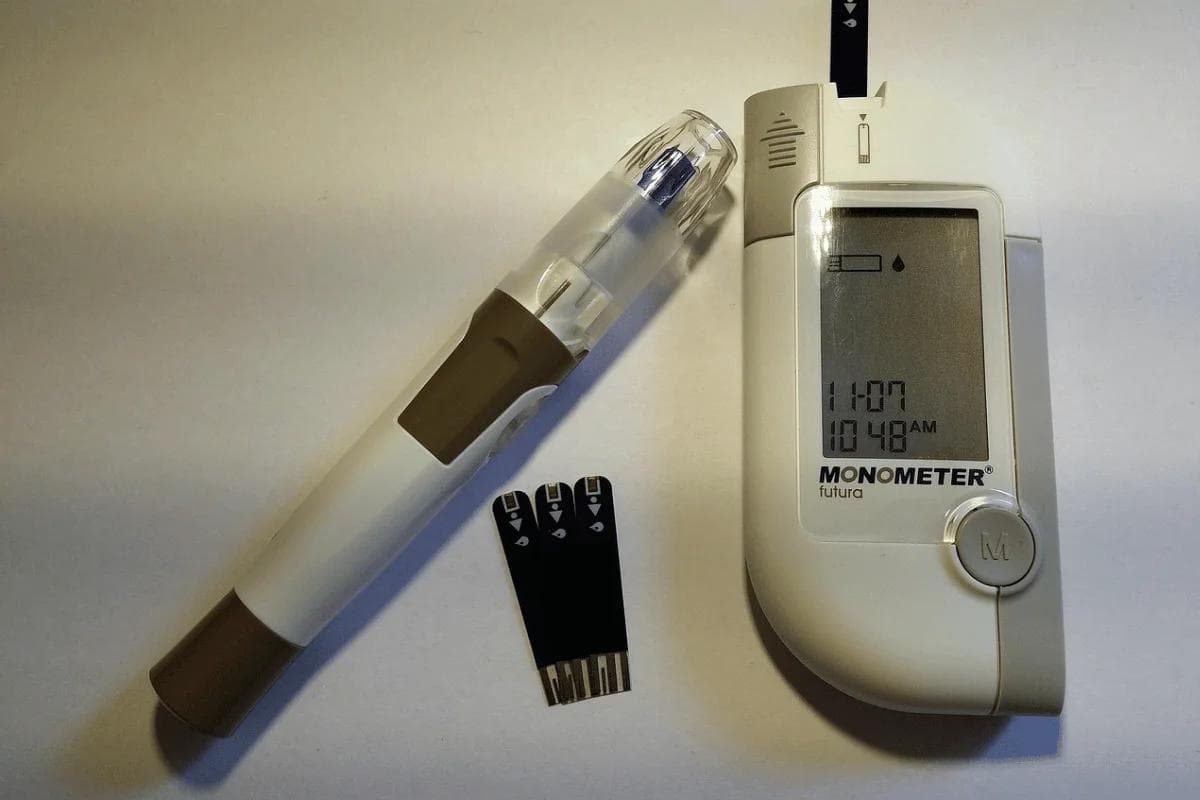
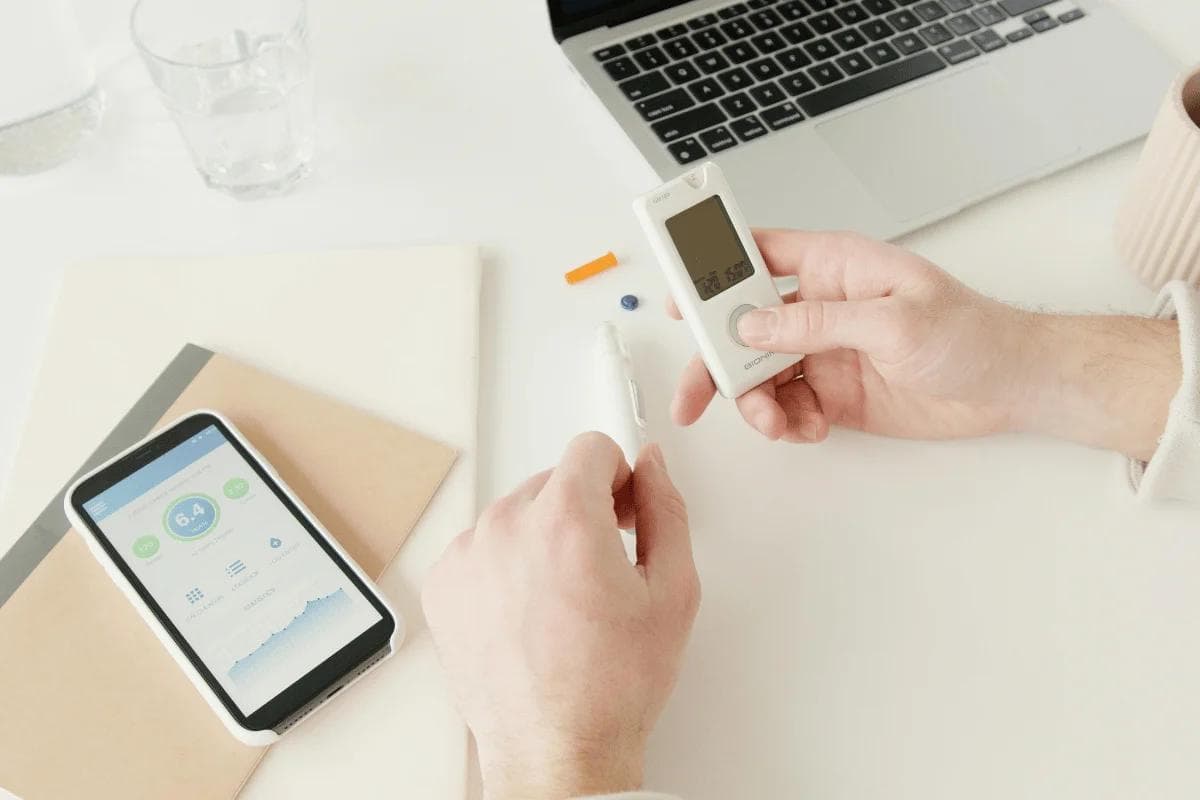
- Continuous glucose monitors for real-time blood sugar readings in diabetic patients.
Pulse oximeters to monitor oxygen saturation in patients with respiratory diseases. - Smart scales to track weight.
- Wearable activity trackers to monitor heart rate variability, sleep patterns, physical activity, etc.
For the interventions to work effectively, you should accompany device setup with patient training on device usage and maintenance.
Automatic Data Transmission
The reason you want to use connected devices is to enable automatic data transmission. Connectivity can be Wi-Fi- or cellular-powered.
However, because relying on patient-provided internet introduces a layer of complexity, it is best to rely on cellular-powered health monitoring devices to ensure consistent data transmission to your cloud-based platform.
Also, to reduce friction, confirm that the devices seamlessly integrate with your preferred platform before committing.
Data Analysis and Care Team Intervention
Upon reaching your cloud-based platform, the data is analyzed and prioritized.
Many platforms now use intelligent algorithms to prioritize and escalate critical issues and ensure they are routed to the right team member immediately.
Further, with the advancements in AI, these algorithms can now predict adverse events before they happen by correlating real-time physiological readings with historical clinical records (the baseline).
Predictive analytics and timely clinical interventions can help you significantly reduce hospitalizations and ER visits.
How KangarooHealth Supports IoT Connected Care
While IoT-connected care is tech-heavy, its implementation doesn’t have to mean more technical work for you and your team.
KangarooHealth offers a turnkey ecosystem designed to take the operational and tech burden off your team’s shoulders.
Here’s how:
- We procure and distribute the hardware on your behalf, taking the burden of device logistics off your plate.
- We offer the largest library of FDA-cleared/approved cellular-powered devices, enabling you to deploy IoT-connected care in remote, rural areas with unreliable connectivity.
- We integrate our platform with your existing EHR, ensuring seamless data flow and enabling your entire team to draw from a single source of truth.
- We provide an all-in-one digital health suite so you can support multiple value-based care programs, including RPM, CCM, RTM, PCM, APCM, and GUIDE, from one platform.
- We automate documentation, so you’re always billing- and audit-ready.
Additionally, our turnkey implementation includes patient/staff training and ongoing support.
IoT Connected Healthcare Applications
The capabilities we’ve discussed, such as real-time telemetry and automated escalations, have widespread applications in modern healthcare.
You can deploy the solutions in the following areas:
- Chronic disease management: The solutions are incredibly valuable when you want to roll out programs like Remote Patient Monitoring (RPM) and Chronic Care Management (CCM). These programs help deliver patient-centered care at scale by replacing episodic, office-based care with continuous, remote oversight.
- Post-operative and acute care: The solutions can help you extend intensive care to the patient’s home after discharge. The hospital-at-home model leverages connected devices such as smart bandages and oxygen saturation monitors, allowing the patient to recover in the comfort of their own home without compromising on oversight.
- Senior care and safety: IoT is improving geriatric care by enabling ambient fall detection and gait/mobility analysis. You can be alerted when the patient falls or when a fall is likely (predictive analytics).
Future Trends in IoT Connected Health
As technology advances, IoT-connected care will grow in both capabilities and healthcare applications.
Below are the trends we believe will accelerate with time:
- Edge (device) AI: At the moment, most providers analyze data at the cloud-based software platform level. With time, we will see more AI capabilities integrated at the device layer, significantly increasing the speed of data processing and analysis.
- Ambient sensing: When you need to track daily activities, such as self-care tasks, wearable monitors will be replaced by ambient sensors, e.g., wall sensors installed in the shower.
Frequently Asked Questions (FAQs)
Let’s now answer some common questions we get about IoT healthcare solutions:
What is the Difference Between IoT Connected Health and Telemedicine?
IoT-connected health focuses on the data stream side of healthcare delivery, leveraging connected devices and software platforms to ensure care and data continuity.
Telemedicine focuses on the human interaction side, using audio/video/chat features to facilitate episodic virtual patient-provider interactions.
How Reliable Are IoT Health Devices Compared to Traditional Medical Equipment?
Traditional medical equipment is highly reliable. Nonetheless, medical-grade IoT health devices have also achieved a level of reliability that you can confidently deploy them in most healthcare settings.
Consider using only FDA-cleared or approved devices for RPM and CCM.
Are IoT Connected Health Solutions Customizable for Different Medical Specialties?
Yes, customizability is a major selling point for many vendors. You can customize a solution to fit your specific data needs and clinical workflows.
What Happens if an IoT Health Device Loses Connectivity?
Some devices have redundancies built in. For instance, if the primary connection is via Wi-Fi, a secondary connection could be via Bluetooth (the patient’s smartphone).
That said, in the event of complete connectivity loss, the following protocols may apply:
- Store-and-forward later: The device stores the collected data locally and forwards it to the cloud as soon as connectivity is restored.
- Prioritization: The most critical data is forwarded first as soon as connectivity is restored.
Conclusion
As healthcare moves from episodic, reactive models to continuous and proactive ones, IoT healthcare solutions can give you the infrastructure you need to make the shift confidently.
However, the infrastructure isn’t just about the hardware. It is also about the software acting as the system's brain, while the clinical team ensures care delivery still has that much-needed human touch.
At KangarooHealth, we deliver this complete ecosystem. We provide reliable connected devices, a robust cloud-based platform, and a dedicated multi-lingual virtual nursing team to ensure all your patients feel heard.
Contact us today to see how we can help you scale chronic care delivery with IoT healthcare solutions while still retaining the human touch.

Dr. Xiaoxu Kang
AuthorAs CEO and Founder of Kangaroohealth, Dr. Kang is a healthcare innovator with nearly two decades of experience in healthcare and 20+ national and international awards. She received her PhD and medical training from Johns Hopkins University.Dr. Kang, CEO and Founder of Kangaroohealth, is a healthcare innovator with nearly two decades of experience. She has received over 20 national and international awards. Dr. Kang completed her PhD and medical training at Johns Hopkins University.