


8 Best Care Coordination Platforms: Features, Benefits, and Use Cases





Author
As CEO and Founder of Kangaroohealth, Dr. Kang is a healthcare innovator with nearly two decades of experience in healthcare and 20+ national and international awards. She received her PhD and medical training from Johns Hopkins University.Dr. Kang, CEO and Founder of Kangaroohealth, is a healthcare innovator with nearly two decades of experience. She has received over 20 national and international awards. Dr. Kang completed her PhD and medical training at Johns Hopkins University.


Do you feel you don’t have complete visibility across your various care teams? It’s a serious concern, as fragmented care can lead to missed follow-ups, readmission penalties, and high administrative burdens.
Fortunately, several digital health companies now offer tools to help close these visibility and coordination gaps.
In this post, we outline the best care coordination platforms and how to choose the right one for your patients and practice.
TL;DR - 8 Best Care Coordination Platforms
Here’s a quick rundown of the care coordination platforms we’ll cover in this post:
| Column 1 | Column 2 | Column 3 |
|---|---|---|
Platform | Features | |
KangarooHealth | Patient engagement features | |
Features to support Remote Patient Monitoring, Remote Therapeutic Monitoring, Chronic Care Management, Principal Care Management, Advanced Primary Care Management, and GUIDE | ||
AI-powered predictive analytics | ||
Omnichannel communication | ||
Automatic time tracking | ||
Automated formatted documentation | ||
Oracle Health | Integrated enterprise solutions | |
Care coordination solutions supporting behavioral health, community care, home health, long-term care, and rehabilitation | ||
CarePort | Features to manage patients across the continuum | |
Referral management features | ||
Real-time data and alerts | ||
Innovaccer | AI-powered assistants at every touchpoint | |
End-to-end prior authorization automation | ||
Data enrichment with intelligent algorithms | ||
CureMD | Remote patient care features | |
Care management reporting | ||
Autonomous billing and documentation | ||
Epic Care Everywhere | Agnostic data sharing (outside of Epic) | |
Patient consent features | ||
Record reconciliation | ||
Medication reconciliation | ||
Sprinter Health | Boots on the ground to facilitate hybrid care | |
Predictive logistics | ||
athenahealth | Collaboration on patient care plans | |
Appointment density optimization features | ||
Instant info-sharing |
What Are Care Coordination Platforms and Why They Matter
A care coordination platform is a software that helps care teams streamline healthcare delivery by having a central hub for data and communication.
Your teams can leverage such a platform to centralize patient data, workflows, task management, and communication. The setup helps achieve several goals, including compliance with value-based care.
Aside from that, these platforms matter because:
- They are essential to population health management for identifying at-risk groups and tailoring preventive interventions.
- They are essential to remote patient monitoring and chronic care for centralizing and prioritizing incoming physiological data for clinical action.
As AI-assisted workflows become essential, these platforms can help deploy the workflows without requiring extensive custom coding.

Key Components of Care Coordination Software
You’ll need a platform that can work as the central intelligence hub for your practice.
As such, it must have the following components:
- 360-degree patient record: Record aggregation capabilities are essential. The platform should combine EHR data with claims data and social determinants of health to provide a comprehensive view of each patient.
- Workflow automation system: Automated, intelligent workflows allow streamlining task routing. For instance, if you’re running RPM and a patient's blood pressure is out of range, the platform can automatically alert a nurse.
- Reporting, analytics, and AI: You want to have a unified data reporting dashboard. With AI, the data analytics can not only be descriptive but also predictive, e.g., forecasting disease progression and adverse outcomes.
- Documentation logs: To ease compliance and ensure billing/audit readiness, many care coordination platforms now log clinical activity and other relevant billing and compliance data.
Types of Care Coordination Platforms
The type of care coordination platform you choose will depend on your clinical focus and patient population.
Generally, these platforms fall into the following categories:
- Value-based care platforms: These platforms are built for accountable care organizations running performance-based programs. They are optimized to improve patient outcomes, reduce costs, and streamline billing/reimbursements.
- Program-specific platforms: Some platforms target specific niches or conditions. For instance, there are apps specifically for managing musculoskeletal (MSK) conditions.
- Enterprise platforms: Large health systems need highly scalable and customizable solutions to meet their unique resource needs. The platforms help with data aggregation, workflow standardization, population health management, and referral management.

Key Features to Look for in a Care Coordination Solution
Depending on your unique workflows and patient demographics, the following features may prove essential in a care coordination solution:
- Secure messaging
- Care plan management
- Automated task assignment
- Integration with your existing EHR
- Predictive analytics
- AI-powered risk stratification
- Automated documentation
- Integration with popular wearables
- A closed-loop referral system
Top 8 Care Coordination Platforms Compared
Whether you are looking for a value-based care platform, a program-specific platform, or an enterprise-grade solution, you can now find several reliable care coordination platforms to synchronize patient care across different teams and health systems.
Below are some of the top care coordination platforms to consider:
1. KangarooHealth
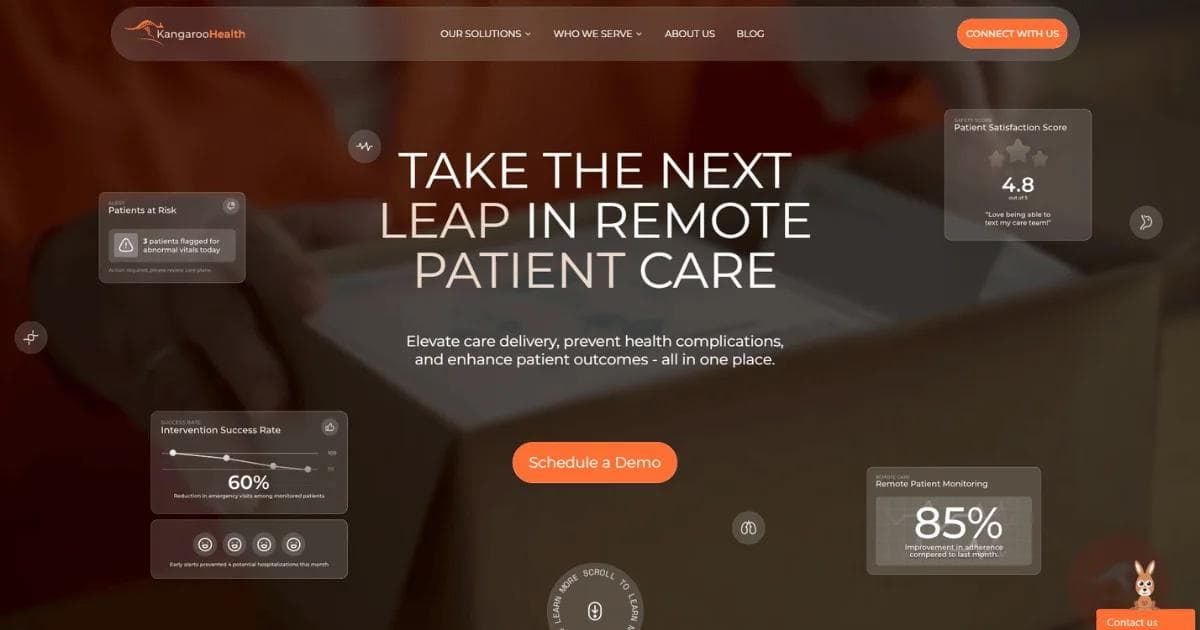
KangarooHealth is a remote patient care company helping providers drive superior outcomes for patients with chronic conditions.
You can use the all-in-one digital suite to implement Remote Patient Monitoring (RPM), Chronic Care Management (CCM), Principal Care Management (PCM), Remote Therapeutic Monitoring (RTM), Advanced Primary Care Management (APCM), and Guiding an Improved Dementia Experience (GUIDE).
With KangarooHealth, you get:
- A comprehensive connected care platform that supports over 50 chronic conditions with customizable care pathways.
- A device-agnostic platform so your patients can use the connected devices they’re already familiar with.
- A virtual multi-lingual nursing team to help with clinical monitoring and care coordination.
- A white-glove implementation approach that includes patient and staff training.
Further, the platform leverages AI to deliver prioritized, real-time insights and alerts. It enables your team to immediately attend to patients at the highest risk of clinical decline, significantly reducing adverse events.
Contact KangarooHealth today to implement remote patient care in weeks, not months.
2. Oracle Health
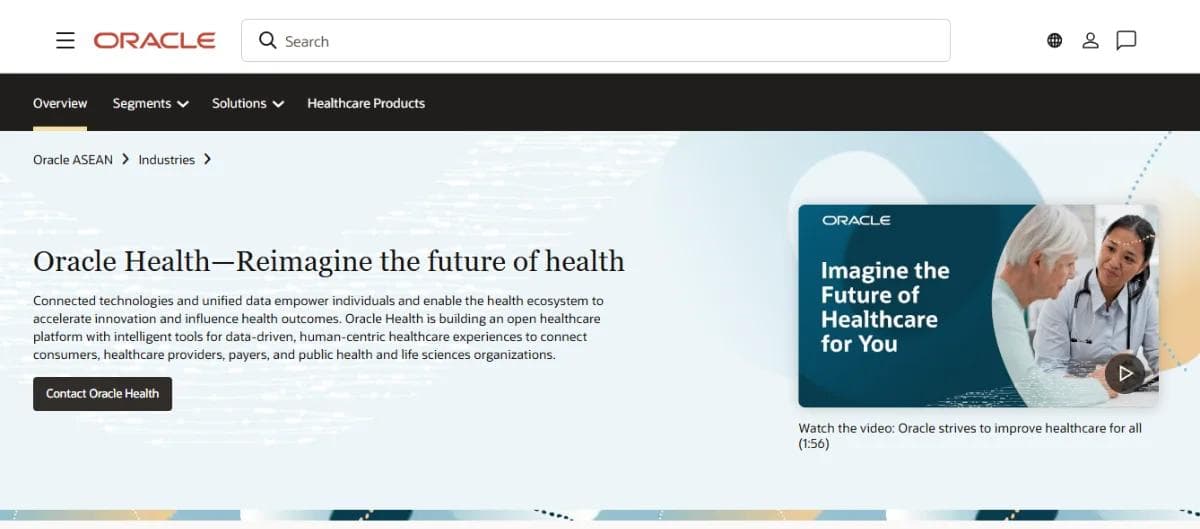
Oracle Health has a comprehensive suite of digital tools to support healthcare delivery, including practice management and care coordination.
You can use its communications and alarms features to facilitate real-time collaboration across care teams. It also has virtual care capabilities to help extend care beyond the hospital.
Because the Oracle ecosystem is complex and tailored to large health systems, it may not be a good fit if you need an easy-to-deploy platform.
3. CarePort
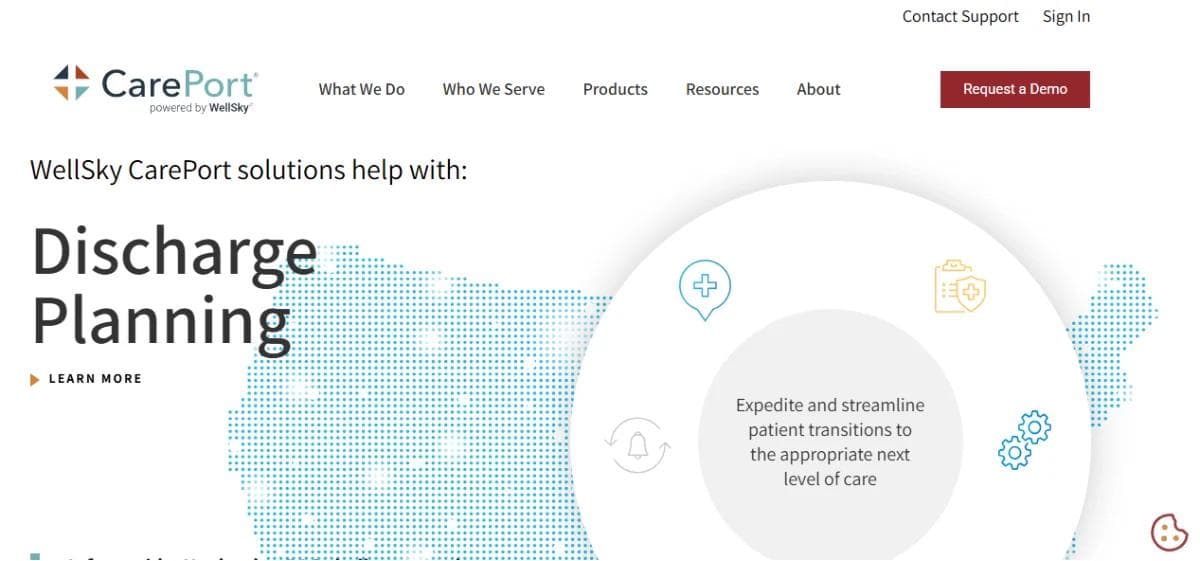
CarePort is run by WellSky, a digital health company focusing on home and post-acute care. The platform serves post-acute care providers, physician groups, hospitals, and health systems.
Its care coordination features can help you identify and track patients across the continuum of care.
You can use the platform to receive clinical updates and alerts to track patient progress and steer them towards the appropriate level of care. The approach helps stop avoidable readmissions before they happen.
4. Innovaccer
Innovaccer helps large health systems improve care coordination by unifying clinical, claims, and social data into a single longitudinal patient record.
The platform's intelligent algorithms can help you enrich the data with care gaps, risk profiles, engagement data, and quality measures.
You can then activate the enriched data directly within clinical workflows to drive value-based care and to reduce administrative provider burden.
5. CureMD
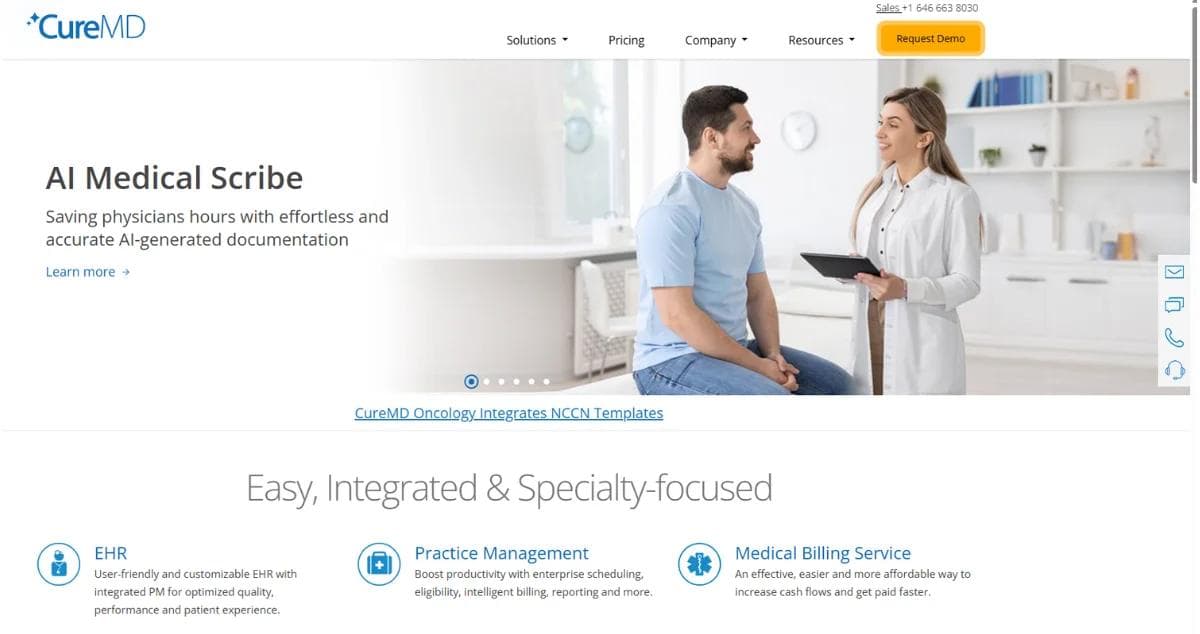
CureMD is a digital health company offering providers a wide range of practice management and care coordination solutions, including an AI-powered patient engagement platform and chronic care management software.
The patient engagement platform features care gap alerts, longitudinal health records, care team messaging, and conversational AI, among other capabilities.
Because it does not provide clinical support services, it may not be a good fit if you need a virtual nursing team to help you implement remote patient care.
6. Epic Care Everywhere
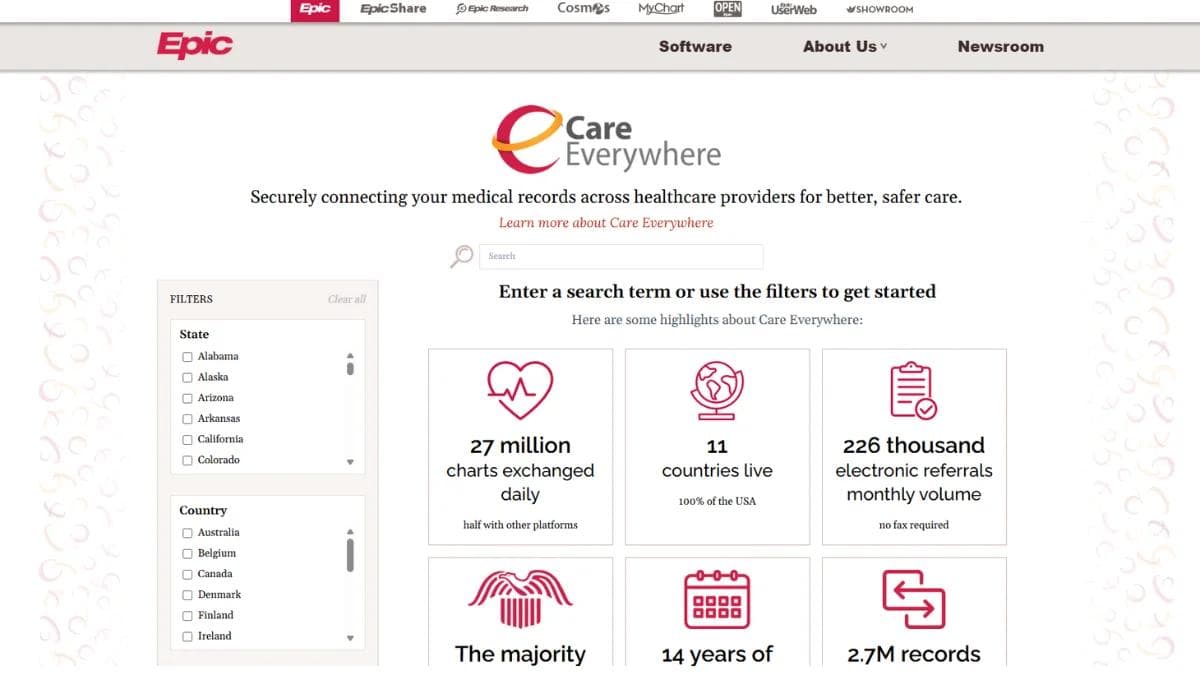
Epic Care Everywhere is a Health Information Exchange (HIE) that allows providers to share patient records almost instantly.
Because of Epic’s wide coverage, the system enables providers to access a patient's complete historical data across the entire healthcare system. According to the platform, 22 million charts are exchanged daily, with half coming from outside Epic’s ecosystem.
7. Sprinter Health
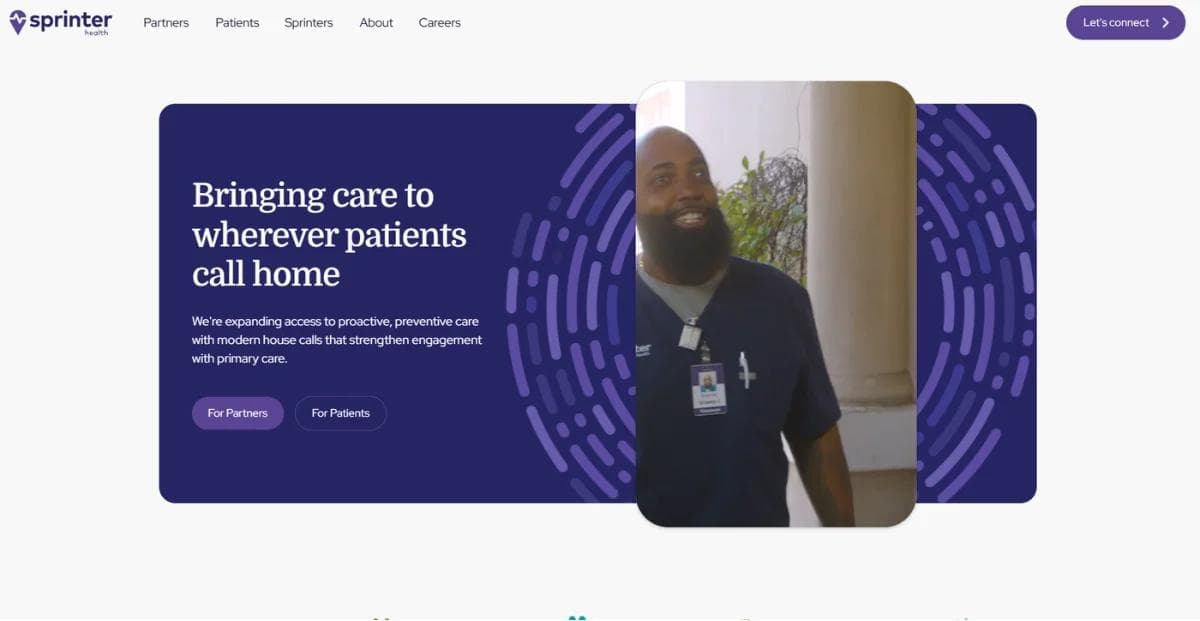
Where care coordination needs boots on the ground, Sprinter Health may be a good fit. The platform targets virtual-first providers who need in-person care teams to deliver personalized primary care.
The hybrid model utilizes “sprinters” who include nurse practitioners, pharmacists, and care navigators.
The sprinters are drawn from the communities they serve, and their primary role is to close care gaps during house calls. They perform clinical diagnostics, uncover social drivers of health, and reconnect patients to longitudinal care.
8. athenahealth
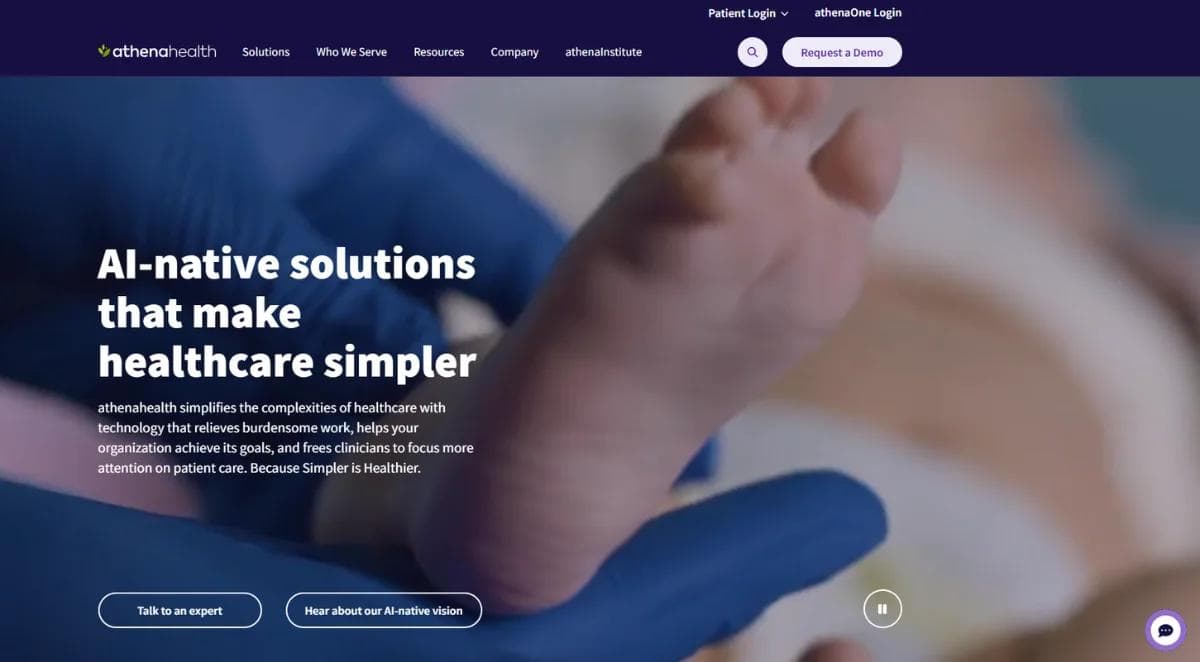
The company has a suite of digital solutions for practice management, patient engagement, and care coordination.
You can leverage the care coordination features to collaborate on patient care plans with other clinical teams without ever leaving the patient chart. Other features include a scheduling tool to facilitate appointments and instant info-sharing with other providers.
How to Choose the Right Care Coordination Platform
Here are some of the considerations to keep in mind when choosing a care coordination platform:
- Unique workflow needs: Can you customize the platform to fit your unique workflows? Some vendors offer non-disruptive implementations to fit your specific setting.
- Vendor reputation: Does the vendor have a verifiable track record of top-tier service? Has it worked with practices similar to yours?
Also, speed to implementation matters. You shouldn’t have to wait several months to see the benefits of RPM, CCM, or any other program.
At KangarooHealth, we leverage customizable templates and proven implementation workflows to accelerate time-to-launch.
Our white-glove onboarding support includes patient and staff training. For programs that require connected devices, such as RPM, we’ll procure and distribute the devices on your behalf.
Challenges in Implementing Care Coordination Solutions
You can sidestep most of the implementation challenges by working with the right vendor.
That said, it helps to know the following common issues so you can effectively plan for them:
- Alert fatigue: Poor program design and implementation can result in many unnecessary alerts, increasing the risk that a critical event goes unnoticed. Use intelligent escalation protocols to ensure only the right team members are contacted.
- Data silos: Integration issues can lead to data silos. Ensure the care coordination platform can talk to your EHR.
Also, the implementation may be hampered by workforce capacity issues, as patient-centric care coordination typically requires committing additional personnel hours.
To manage this challenge, KangarooHealth provides a turnkey, white-label clinical support service tailored to your workflows, enabling you to use our dedicated remote clinical team for daily patient monitoring and coordination.

Frequently Asked Questions (FAQs)
Looking for more information about care coordination platforms? Here are answers to some of the commonly asked questions:
How Long Does It Take to Implement a Care Coordination Platform?
The duration depends on the size of your practice, the vendor's capacity, and the design of the care coordination program.
At KangarooHealth, we typically complete our implementations within 2 weeks.
What is the Average Cost of a Care Coordination Platform?
The costs vary because vendors have different pricing models. Usually, pricing is based on practice size and the chosen services.
When you use Kangaroohealth to run programs like RPM and CCM, the Medicare reimbursement typically exceeds the cost of the platform and clinical services.
Can Care Coordination Platforms Replace EHR Systems?
No, they are designed to serve different functions. An EHR system’s role is primarily documentation and historical record-keeping.
Care Coordination platforms facilitate real-time care delivery by streamlining communication, automating escalations, and managing active workflows.
What Training is Required for Care Coordination Platforms?
Consider rolling out staff training on how to navigate the platform's functions and features. You also want to train them on the new clinical workflows, covering care plan creation/customization, escalation pathways, and team collaboration.
Patient training is also essential. Educate patients on why they are being onboarded to the platform, how to use it, and how to contact their caregiver.
Conclusion
As the transition to value-based care accelerates, you must expand your technology stack beyond the traditional EHR. You can start by investing in care coordination tools with remote care capabilities to support your patients between in-person visits.
Such support is especially valuable if you manage chronic patients with conditions like diabetes, hypertension, and Chronic Obstructive Pulmonary Disease (COPD).
At KangarooHealth, we offer a remote patient care platform that supports over 50 chronic conditions with customizable care pathways and seamless workflow integration.
Contact us today to speak with an expert and learn how we can help you implement a turn-key care coordination platform for chronic conditions.

Dr. Xiaoxu Kang
AuthorAs CEO and Founder of Kangaroohealth, Dr. Kang is a healthcare innovator with nearly two decades of experience in healthcare and 20+ national and international awards. She received her PhD and medical training from Johns Hopkins University.Dr. Kang, CEO and Founder of Kangaroohealth, is a healthcare innovator with nearly two decades of experience. She has received over 20 national and international awards. Dr. Kang completed her PhD and medical training at Johns Hopkins University.