



RPM Billing Guide - Complete CPT Codes & Setup





Author
As CEO and Founder of Kangaroohealth, Dr. Kang is a healthcare innovator with nearly two decades of experience in healthcare and 20+ national and international awards. She received her PhD and medical training from Johns Hopkins University.Dr. Kang, CEO and Founder of Kangaroohealth, is a healthcare innovator with nearly two decades of experience. She has received over 20 national and international awards. Dr. Kang completed her PhD and medical training at Johns Hopkins University.


Disclaimer: The billing and reimbursement information in this guide comes from third-party sources and may change as healthcare laws and regulations update. This content is for educational purposes only. It's not legal or billing advice.
Healthcare providers (HCPs) are responsible for submitting accurate claims based on medical necessity and following current CMS guidelines, including National Coverage Determinations (NCDs) and Local Coverage Determinations (LCDs).
Reimbursement rates, CPT codes, and coverage requirements differ by payor and location. Always verify billing details with your payors before starting RPM services.
KangarooHealth recommends consulting with reimbursement specialists or legal counsel to ensure compliance. HCPs maintain full responsibility for choosing appropriate services, selecting the correct codes, and following all regulations.
Remote Patient Monitoring (RPM) lets you track patients' health data in real time and catch problems before they escalate. It's proven to lower hospital readmissions and improve outcomes for people with chronic conditions.
Medicare knows this works. They paid out $536 million for RPM services in 2024, a 31% jump from the year before. But getting reimbursed means following strict RPM billing rules.
You need to understand the CPT codes, CMS guidelines, and documentation requirements. When billing is done correctly, your team can focus on patient care rather than claim denials.
Here's what you need to know.
What is RPM Billing and How Does it Work?
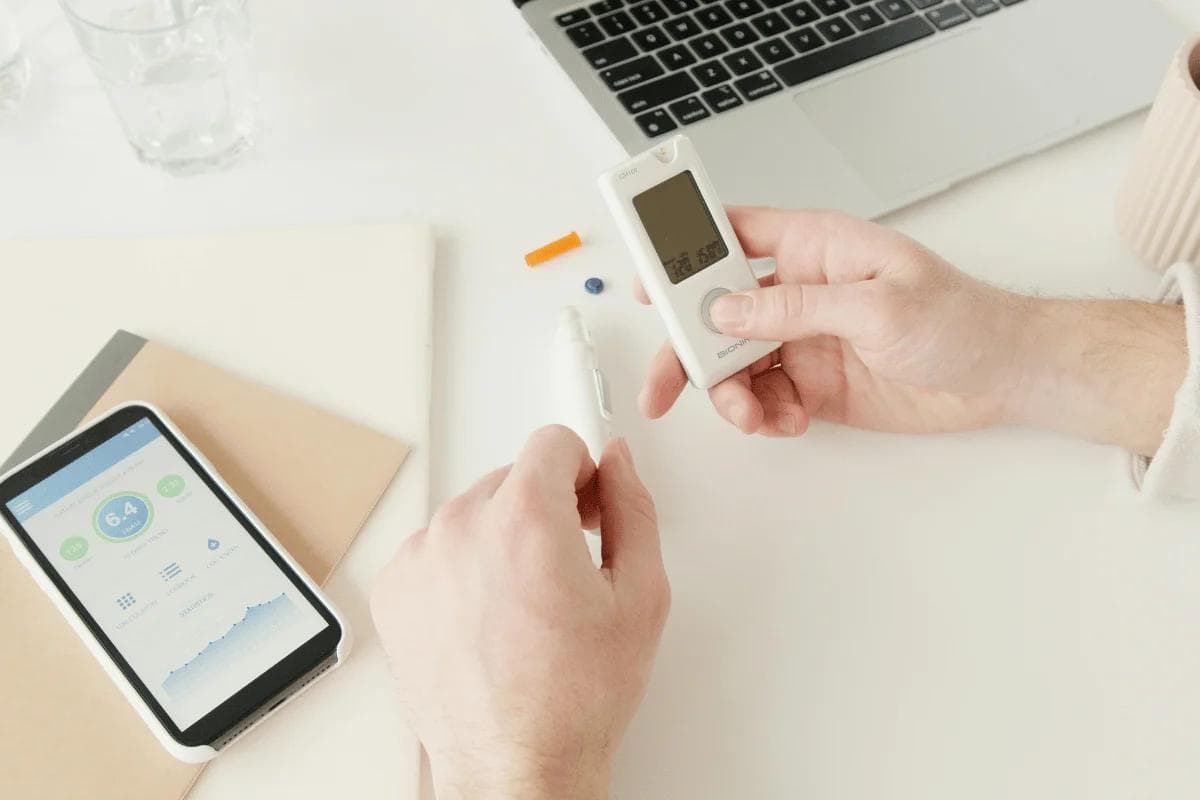
RPM billing is how healthcare providers get paid for monitoring patients remotely using medical devices. These include blood pressure monitors, glucose meters, and pulse oximeters that automatically send data to your practice.
The billing process works through six specific CPT codes. Each code covers a different part of the service.
- You bill once for setting up the device and teaching the patient how to use it.
- Then you bill monthly for the device supply and data transmission.
- Finally, you bill for the time you spend reviewing data and talking with patients about their care.

RPM Billing Requirements and Rules
CMS (Centers for Medicare & Medicaid Services) has seven main requirements you must follow for compliant RPM medical billing:
- You Need an Established Patient Relationship: After May 11, 2023, when the COVID-19 Public Health Emergency ended, you can only enroll patients who have received professional services from your practice within the prior three years. New patients need an initial evaluation visit before starting RPM.
- Patient Consent Is Mandatory: You need to get consent before or when you start services. It can be verbal, but you must document it. The consent should explain the program, cost-sharing responsibilities (20% copayment for Medicare Part B), and what the patient should expect.
- Devices Must Meet FDA Medical Device Standards: The device needs FDA clearance or approval, not just registration. It must automatically upload data electronically. Manual entry devices don't qualify.
- You Need Minimum Data Transmission Days: Starting in 2026, you can bill for 2-15 days of data transmission or 16+ days within a 30-day period using different codes. Track this carefully because auditors will check.
- Treatment Management Time Requirements: You can bill for 10-20 minutes or 20+ minutes of management time monthly using different codes. This includes phone calls, data review, care plan updates, and patient education. Document every activity with timestamps.
- Services Must Be Medically Necessary: You need a documented clinical reason why remote monitoring benefits this specific patient's condition. General convenience or preventive interest alone isn't a sufficient justification.
- Clinical Staff Can Provide Services Under General Supervision: Your nurses and medical assistants can handle most RPM tasks, but the billing practitioner remains responsible for everything.
CMS Remote Patient Monitoring Guidelines
The CMS guidelines for remote patient monitoring have changed a lot in recent years.
16-Day Rule Applies Only to Device Codes
CMS clarified in the 2025 Final Rule that the 16-day requirement applies only to device codes (99453, 99454), not treatment management codes (99457, 99458, 98980, 98981).
This matters because you can still bill for care coordination (if you meet the 20-minute time requirement) even if a patient falls below 16 days of data transmission.
Single Practitioner Billing Rule
Only one practitioner can bill RPM codes per patient per 30-day period. Multiple providers cannot monitor the same patient.
This prevents duplicate billing but requires coordination between providers.
RPM Works for Both Chronic and Acute Conditions
Also, you can use RPM for both chronic and acute conditions. It's not limited to diabetes or hypertension only.
Post-surgical monitoring, medication adjustments, and short-term condition management all qualify if medically necessary.
Established Patient Requirement for RPM vs. RTM
The established patient requirement doesn't apply to Remote Therapeutic Monitoring (RTM), which monitors non-physiologic data, such as pain levels or mobility.
But it absolutely applies to RPM.
These are two separate programs with different rules.
HIPAA Compliance Is Mandatory
All data transmission must comply with HIPAA security requirements. That means encryption, access controls, and secure storage.
Using consumer-grade apps or unsecured devices creates both billing and legal problems.
RPM Billing Restrictions and Compliance Rules
The September 2024 Office of Inspector General report raised serious red flags about RPM in medical billing practices. Understanding what went wrong can help you avoid the same mistakes.
Here are the key RPM restrictions, compliances and best practices you need to follow:
- Provide All Three Service Components: The OIG found that 43% of Medicare enrollees didn't receive all three RPM components: setup, device supply, and treatment management. Some patients got devices, but no actual care management. Others were billed for treatment management without documented device monitoring. Both scenarios violate billing rules.
- Don't Bill RPM and RTM Together: You cannot bill RPM and RTM together for the same patient in the same 30-day period. Choose one or the other based on what you're monitoring. Physiologic data like blood pressure or glucose is RPM. Therapeutic data, like exercise adherence or respiratory therapy, is RTM.
- Don't Double-Count Time: If you're billing both RPM and Chronic Care Management (CCM) for the same patient, the time and activities must be distinct. Twenty minutes of RPM work plus 20 minutes of CCM work equals 40 separate minutes. You can't count the same phone call toward both programs.
- Always Document Ordering Providers: Medicare lacks key information about who ordered RPM services. 44% of enrollees have no ordering provider information on their claims. CMS is likely to tighten documentation requirements in upcoming rule changes. Get ahead of this by documenting ordering providers now.
- Avoid Cold-Calling or Inappropriate Marketing: Internet advertisements and TV commercials inappropriately recruiting beneficiaries create compliance problems. Patients should be enrolled based on medical necessity determined by their healthcare provider, not through marketing campaigns offering "free" devices.
Many practices face staff constraints when managing RPM alongside clinical duties. If that sounds familiar, outsourcing can help.
KangarooHealth trains your staff, handles device procurement, and provides clinical monitoring services - extending your reach beyond clinic walls. Our platform tracks time and activity automatically, so your documentation stays audit-ready without adding work to your team.
And when you need extra billing support, we connect you with trusted partners like North American.
See how our billing support works or reach out to us to see how we can support your practice.
Complete RPM CPT Codes
The 2025 Final Rule established current billing requirements, but major changes are coming in 2026.
Two new CPT codes will expand billing flexibility by removing the all-or-nothing thresholds that currently limit RPM applicability.
So, starting in 2026, you'll use six CPT codes for RPM billing. These codes are split into two categories: service codes and management codes.
RPM Service Codes: 99453, 99445, and 99454
Service codes cover the costs of providing RPM equipment and services. This includes the device itself, teaching patients how to use it, and transmitting data to your practice.
Here's what each code covers:
- CPT 99453 reimburses you for initial setup and patient education on the device. You bill this once per patient when starting RPM services. The 2026 rate is approximately ~$22.
- CPT 99445 pays for device supply when you get 2-15 days of data transmission in a 30-day period. The 2026 rate is approximately ~$47. This new code gives you flexibility for patients with lower engagement.
- CPT 99454 is your monthly device supply code requiring at least 16 days of data transmission in a 30-day period. The 2026 rate is approximately ~$47.
You'll use either 99445 or 99454 each month, depending on how many days of data your patient transmits.
If they hit 16 days or more, you bill 99454. If they only reach 2-15 days, you bill 99445 instead.
RPM Management Codes: 99470, 99457, and 99458
Management codes are time-based, monthly codes. They cover the time you spend communicating with patients, reviewing their data, and managing their care plan.
- CPT 99470 covers your first 10-20 minutes of management time each month. The 2026 rate is approximately ~$26. This new lower threshold for 2026 makes RPM more accessible.
- CPT 99457 covers 20 minutes of management time in a calendar month. The 2026 rate is approximately ~$52. You'll use this when you meet the full 20-minute threshold.
- CPT 99458 bills each additional 20 minutes beyond the initial 20. The 2026 rate is approximately ~$41. You can bill this up to two times per month (at 40 and 60 minutes total).
You cannot bill both 99470 and 99457 for the same patient in the same month. Choose one based on your total time spent.
If you hit 20 minutes or more, always bill 99457 because it pays better. Once you've billed 99457, you can add 99458 for each additional 20-minute block you complete, up to a maximum of two additional blocks per month.

RPM Reimbursement Rates
Let's talk numbers for remote patient monitoring pricing.
A practice with 100 enrolled patients following basic RPM implementation can generate approximately ~$120,000 annually starting in 2026. Keep in mind, this is gross revenue before any vendor or operational costs.
Here's how the math works:
One-Time Setup Revenue:
- CPT 99453 at $22 × 100 patients = $2,200
Monthly Device Monitoring:
- CPT 99454 at $47 × 100 patients × 12 months = $56,400
Treatment Management Services:
- CPT 99457 at $52 × 100 patients × 12 months = $62,400
Total Annual Revenue: ~$121,000
The RPM rates improve significantly when you combine programs. Add Chronic Care Management to RPM, and your monthly revenue per patient jumps much higher.
Here's what combined billing looks like per patient monthly:
- Device monitoring (99454): $47
- RPM treatment management (99457): $52
- CCM basic services (99490): $61
- Monthly total: $160
There may be complex cases that require more time. Complex CCM requiring 60 minutes, combined with RPM and extended treatment management, can cost ~$280 per patient per month.
Extended Management Revenue:
- Device monitoring (99454): $47
- Initial 20 minutes (99457): $52
- Additional 20 minutes (99458): $41
- Complex CCM (99487): $133
- Monthly total: $273
State Medicaid programs offer different rates. Forty-two states covered RPM as of 2025, up from fewer than 30 in 2022.
But reimbursement varies significantly by state. Some match Medicare rates, others pay less, and a few pay more.
Check your state's specific Medicaid policy before enrolling patients.
How to Set Up Your RPM Billing Process
Setting up RPM billing requires a systematic approach.
Here's what you need to do:
- Verify Eligibility: Confirm your practice qualifies to bill RPM services. Only physicians and qualified practitioners eligible for E/M services can bill Medicare for RPM.
- Select an RPM Platform: Pick software that integrates with your EHR system and automatically tracks the 16-day requirement. KangarooHealth's RPM solution handles device procurement, patient training, and clinical monitoring, making implementation easier.
- Assign Clinical Staff: Designate nurses or medical assistants to handle device distribution, patient education, daily data review, and care management activities. Most practices need one to two coordinators per 150-200 patients.
- Train Your Billing Team: Educate billing staff on all six CPT codes, the 16-day rule, time tracking requirements, and restrictions on concurrent billing with other programs.
- Create Patient Selection Criteria: Focus on established patients with chronic conditions like diabetes, hypertension, heart failure, or COPD. Verify they received services from your practice within three years.
- Document All Three Components: Bill separately for patient education (CPT 99453), device supply (CPT 99454/99445), and treatment management (CPT 99457/99458/99470). Each requires specific documentation.
- Implement Time Tracking: Use software or spreadsheets to log every patient interaction immediately. Record the date, duration, activity type, and staff member involved.
- Establish Billing Workflows: Submit monthly claims with appropriate CPT codes and ICD-10 diagnosis codes. Bill device codes when data transmission thresholds are met and management codes when time requirements are reached.

Tips to Combine RPM with Other Care Management Programs
RPM works well with other care management programs to maximize both revenue and patient outcomes.
But each combination has specific rules you must follow to stay compliant.
Here's what works and what doesn't:
- RPM Plus Chronic Care Management (CCM): Chronic Care Management requires patients with two or more chronic conditions. RPM monitors specific health data through devices. You can bill both in the same month, but time cannot overlap.
- RPM Plus Principal Care Management (PCM): Principal Care Management focuses on single, complex chronic conditions and requires 30 minutes monthly. This pairs well with RPM for conditions like heart failure, where daily monitoring informs specialist care.
- RPM After Transitional Care Management (TCM): TCM provides post-discharge services for 30 days at $168 for moderate complexity. After TCM ends, transition patients into RPM and CCM programs.
- RPM Plus Behavioral Health Integration (BHI): You can bill BHI concurrently with RPM, CCM, or PCM. A patient with diabetes, hypertension, and depression could receive RPM, CCM, and BHI together. Get separate consent for BHI and track time distinctly from other programs.
The golden rule for every combination is that you have to track time separately for each program.
Obtain separate consents. Maintain distinct care plans. Document everything. Any overlap in time or activities will trigger compliance problems during audits.
Frequently Asked Questions (FAQs)
Below are answers to common questions about RPM billing:
Can RPM Billing Be Used for Chronic Care Management?
No. RPM and Chronic Care Management are separate programs that require separate billing. RPM monitors physiologic data through devices. CCM provides comprehensive care coordination for patients with multiple chronic conditions using CCM CPT codes.
You can bill both for the same patient in the same month as long as the time and activities don't overlap. Document 20 minutes for RPM separately from the 20+ minutes required for CCM.
Who Is Eligible for RPM Services Under Medicare?
Medicare beneficiaries who received services from your practice within the prior three years qualify.
RPM works for both chronic conditions, such as diabetes, and acute conditions, such as post-surgical monitoring. You need documented medical necessity for each patient.
What Devices Qualify for RPM Billing?
Devices need FDA clearance or approval and must automatically transmit physiologic data. Qualifying devices include cellular-enabled blood pressure monitors, pulse oximeters, glucose meters, digital scales, and thermometers.
Manual entry devices don't qualify. A patient texting you their blood pressure readings doesn't count.
How Do Payors Reimburse for RPM Billing?
Medicare pays through the six CPT codes at standardized rates. In 2026, you'll get approximately $22 for setup, $47 for device supply, $26-52 for initial care management, and $41 for additional management time.
Medicare Part B patients pay a 20% copayment.
Is Patient Consent Required for RPM Billing?
Yes, you must get consent before starting RPM services. Consent can be verbal or written, but must be documented in the medical record. Without documented consent, you cannot bill for RPM services.
Conclusion
RPM adoption by Medicare and other insurers is lowering hospital readmissions and improving outcomes for patients with chronic conditions who need ongoing monitoring.
Making RPM work requires the right infrastructure and support. KangarooHealth is a comprehensive partner that supplies devices, trains your team, and provides white-label clinical monitoring services under your brand.
Our multilingual nursing staff speaks 15+ languages, so everyone gets the personalized attention they need.
Schedule a demo to see how we help practices like yours succeed with RPM, CCM, PCM, and other monitoring solutions.

Dr. Xiaoxu Kang
AuthorAs CEO and Founder of Kangaroohealth, Dr. Kang is a healthcare innovator with nearly two decades of experience in healthcare and 20+ national and international awards. She received her PhD and medical training from Johns Hopkins University.Dr. Kang, CEO and Founder of Kangaroohealth, is a healthcare innovator with nearly two decades of experience. She has received over 20 national and international awards. Dr. Kang completed her PhD and medical training at Johns Hopkins University.
Other articles you might find interesting

Benefits of Care Coordination for Patients, Providers, and Healthcare Organizations

How to Improve Care Coordination [Examples Included]
Value-Based Care Trends in 2026: AI, RPM, CCM, and Connected Care